Sometimes, in the swirl of creative projects and the everyday rush of parenting, it feels like the quiet moments slip away before we notice. I find myself reflecting on how easily I fill the silence—whether with art, prayer, or just the hum of laundry tumbling in the next room.
I’m trying to seek intentional pause in my days: a cup of coffee slowly sipped, turning the TV off early in the evening, read a physical book and marking things direct in the pages that speak to me, and even cuddling our pups close and listening to their breathing when they relax against me to nap.
These little moments feel like something I’ve been chasing lately – like fireflies dancing in the wind. And when I realize what I’ve found, I can’t help but pause — pause and drink in the beauty of finally capturing a brief moment of calm that sustains me when life gets busy.
I have to laugh. This is nothing I would have wanted as ‘Past Me’. The quiet would have been too much like giving up on an adventure, or something I would sit in anxiously rather than peacefully.
But now I crave this reflective time, enjoying observing and listening rather than being in the center of it all. This evolution is a change of priorities, realignment of where my focus is nowadays, and also self-care from being part of the chaotic secular world. A world that constantly pushes for more action than introspect, and claims we fall behind when we lack ‘hustle’.
But it’s the hustle itself that these glimmers of time pushes away when God aligns our path with them. He truly knows what we need and my guess? It’s quiet time for me in this season of life. It’s reflecting and, while I’m still up for adventure, it’s more “smelling the roses” than it is being an adrenaline junkie.
What does it look like for you to make space for God’s gentle voice amid your daily rhythms? I’d love to hear how you find (or miss) those pockets of stillness in your own season of life.
“Hi, my name is Samantha… and I”m a perfectionist with OCD.” “Hi, Samantha.”
Yep – I’m a perfectionist with OCD, but not in the way you would attribute to these behaviors. I’m not the person who has everything color coded, unless you’re talking about my spreadsheets (LOVE my spreadsheets!), or the person who has everything pristine-clean and stacked exactly so, or any of the other random ideas you probably have of either of these.
Now, you may be thinking, ‘Samantha, you already shared this – we know.’ But this post is about grace, and it’s hard for me to talk about grace without highlighting these two attributes for myself. I think, when you consider your own life, you’ll see something there that you can replace either of these with, and find that it is an exact fit for you, too.
Like I said, both of these behaviors manifest in different ways, for different situations. While I can have a bit of the quintessential qualities, most of mine are produced in silence. Just looking from the outside in, you won’t notice that these are two things I grapple with on a daily basis. Some days I come out the winner, and other days I just accept the loss – but never forget.
I’m a planner, and when I invest a lot of thought and consideration into a project, it’s disappointing when it doesn’t come out the way I expected – but I pivot and trick my brain into thinking the new direction is what we really wanted the whole time.
I’m detail-oriented and compartmentalize, but sometimes don’t know how to integrate this in with others. That’s why, working in a position where I’m solo for certain tasks is perfect. I keep my responsibilities plugged into labeled folder tiers for digital archiving and binders for specific categories that I have physical items for. When life gets crazy, I hit a ‘reset day’ and focus on just the organization and putting the system back together. (This one is definitely an OCD habit – because the satisfaction of ‘everything has a place, everything has a home’ being fulfilled gives me such a sense of peace.)
I can hyper-focus and crank out a high-volume of quality productivity, but there are things that have to be in place for it to happen. I keep a notebook next to me for when random ideas (which happen all the time) suddenly hit, I have timers set to get up and talk to people, use the restroom, or eat food (otherwise I completely forget these things – people then ask if I’m ok or they think I’m hiding, I get sick, or end up having brain fog from inadequate brain fuel), and I have to wear noise-cancelling headphones and know that I’m not officially responsible for anything but the task I’m working on in the moment (meaning someone else is covering the other tasks) — otherwise, I’ll greet every sound of the door, react to every ping of email to knock it out immediately, or even get distracted by new ideas/brainstorming when someone talks about new projects – even when they didn’t ask for help. This is especially distressful when someone is really needing something specific from me that I should have been working on the whole time but got distracted.
You can pivot, reorganize, ignore, and all the other things for a while, but when other essential well-being functions slip, like proper nutrition, self-care, adequate sleep, etc… those are the days that the resilience of overcoming these behaviors is lost, leading to a ‘loss’ for the day.
And here’s the part where most people say the same thing: “Give yourself some grace…”
Yep – title statement and the main point of my post today.
I’m the first to admit, I beat myself up over the shortfalls I have, or blame myself when things are actually outside of my control. I’m not perfect – while I strive for the fulfillment of what my brain considers to be the ‘perfect’ completion of a task or goal, I’m not.
And when things trigger depression, anxiety, or other stress responses, you’ll still see me start to shift things into right angles/symmetry. I guess I figure if my mind is in a tangle, the things around me shouldn’t be.
And when I’m overwhelmed (which can happen with justifiably big situations, or even over the smallest little detail — it just depends on what pushes the lid off the bottle I keep pouring things into), I’ll still strive to reset my space and regroup in a way that people will think is maybe an inappropriate response to a situation, but is necessary to give my brain time to process, otherwise I shut down.
“Give yourself some grace…”
I think I bypass remembering to give myself grace because I don’t think I’ve earned it. And that’s a script I’m constantly having to rewrite for myself. God doesn’t have a finite amount of grace to share with us – grace cannot be exhausted.
I am just as worthy of his grace and mercy as the people I find it easy to extend grace and mercy to in my life. Even with the exact same situation, I can offer these things to someone else without a blink – so why can’t I for myself? Is it because I think the situation isn’t worthy of it, or do I think I’m not worthy of it?
I subscribe to Faithbox, and each month they include a devotional with a one-word theme. This month, they’re focusing on Grace. And somehow, the devotional each month has been exactly the keyword of what’s happening in my life at the time.
“Out of his fullness we have all received grace in place of grace already given.” – John 1:16
The devotional for today features this scripture, and it gives me hope. Grace is given in place of grace already given. It’s not a one-time dip into the living water to be renewed. It’s something that can be done over and over again, offering grace for the big things and also the day-in/day-out moments. I can do my part to share grace and mercy with others, being a reflection of what God has done for me in my life.
There is no quota to hit – no magic number I have to achieve. I do not have to earn what is freely and abundantly given.
Are you struggling with giving yourself grace?
While it’s not something that can be changed overnight, I know there are things I can add to my day that help me stay connected with God, and the grace he so freely offers.
Spend time in meditation and prayer
Read the Scriptures, focusing on the areas that highlight grace, mercy, and God’s abundant love
Listen to podcasts that highlight grace and spiritual disciplines to bring us closer to God
Connect with a small group or church family
Be part of corporate prayer, which helps us to see areas we may be overlooking in ourselves
Work through a Bible Study that focuses on grace and mercy
Call a friend to be a sounding board and to help see things from another perspective
Ask yourself: “What would I say to a friend who was struggling with the same situation?“
These are a few of the things I turn to, but I know there are many more ways. And I can go more days than not giving myself adequate grace when I feel like I miss the mark. But the biggest reminder I like to stay focused on is that God wants me to bring my authentic self to him — every day, every way.
He does not ask for the perfection — he knows we can’t obtain it. He doesn’t ask for me to know exactly what to say or pray — he already knows my heart. And he doesn’t expect me to earn his love and grace — he gives these freely to us. We just have to believe, obey the teachings, and trust him with our whole heart.
If you’re looking for a church community to connect with, I know just the place that wants nothing more than for you to come as you are, with an open heart. 🧡
You can connect with Aldersgate Abilene at http://www.aldersgateabilene.org or reach out to the church office for more info (office@aldersgateabilene.org)
A friend I work with recently said that church is where the broken come to heal… and it really resonated with me. I go to be filled, to find healing, and to give back to others what I’ve found at Aldersgate.
Would you like to see how Aldersgate can do this for you? 🫶
There’s something magical about daily doodles. They’re not about creating a masterpiece, but about showing up, being present, and letting creativity flow without judgment.
Original hand drawn doodle – Sept. 17, 2025
These aren’t just sketches. They’re snapshots of moments, prayers without words, reflections of inner landscapes that can’t always be explained but can be drawn.
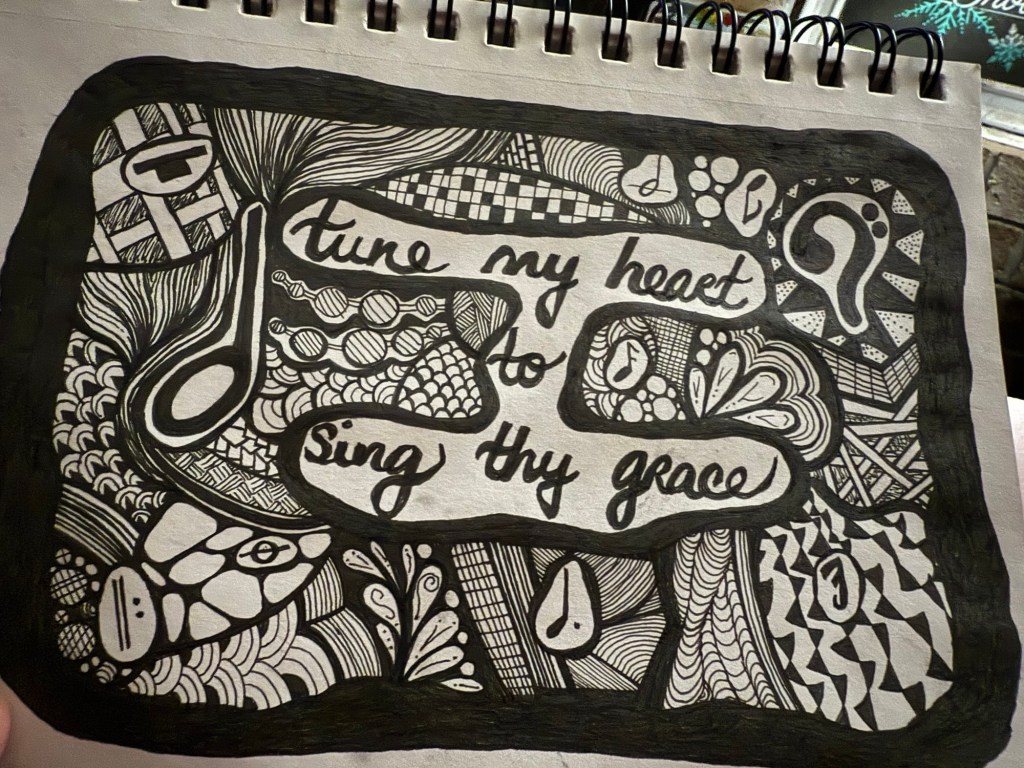
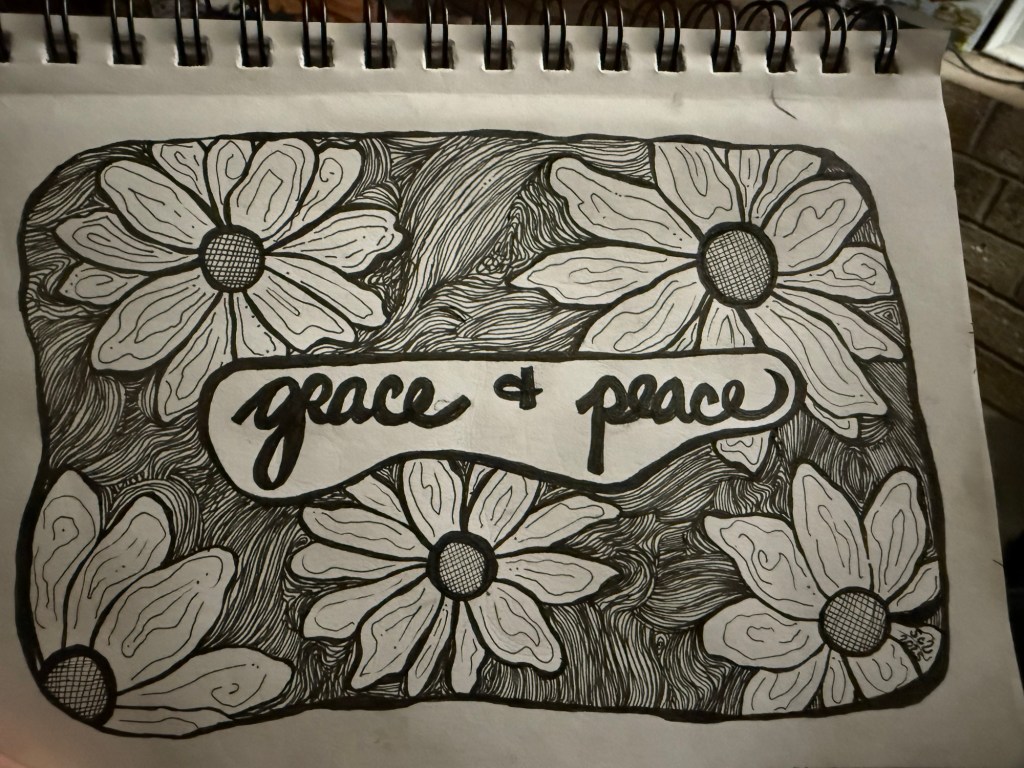
Tune My Heart to Sing Thy Grace
Original hand drawn doodle – Sept. 21, 2025
The first piece feels like a visual prayer. Each intricate pattern – the swirling lines, the geometric shapes, the carefully placed words – speaks to the complexity of faith. “Tune my heart to sing thy grace” isn’t just a phrase, it’s an invitation. An acknowledgment that sometimes our hearts need retuning, need to be reminded to see beauty, to find grace in the midst of complexity.
The black and white zentangle style mirrors spiritual life so perfectly. Not always clear-cut, not always straightforward, but rich with texture and depth.
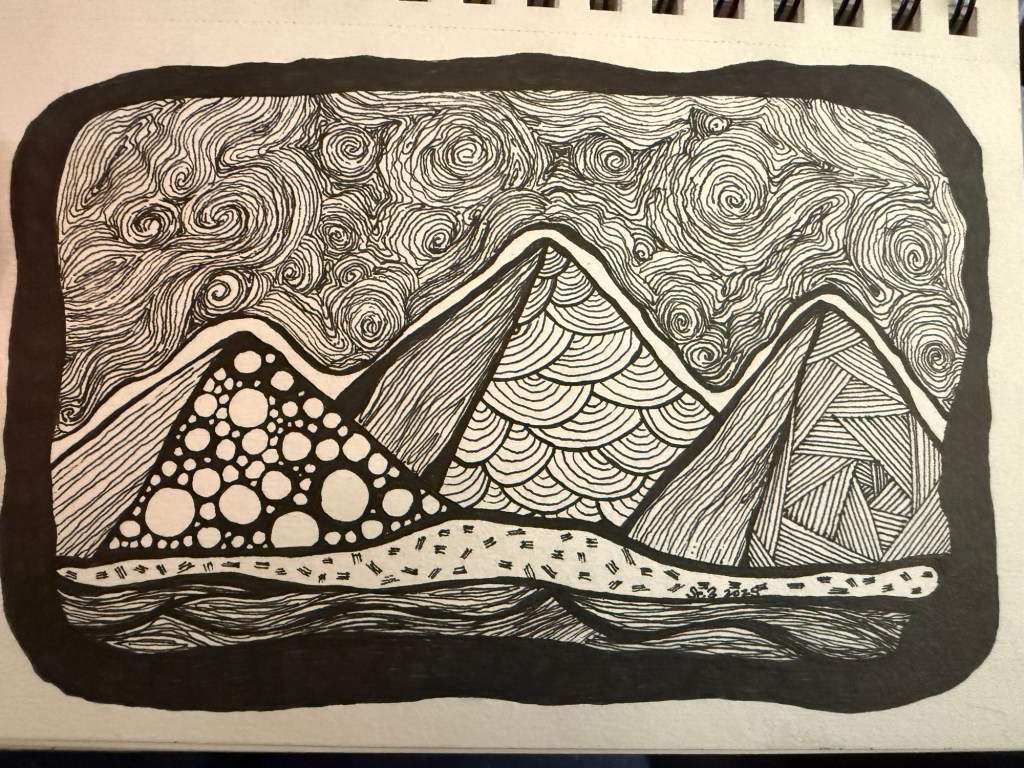
Landscape of the Soul
Original hand drawn doodle – Sept. 19, 2025
The mountain landscape feels like an inner terrain. Those swirling skies remind me of emotional landscapes – sometimes turbulent, sometimes peaceful. The different textures of each mountain – dotted, lined, wave-like – suggest the varied terrains of our inner worlds.
It’s fascinating how a simple black and white drawing can communicate so much movement, so much feeling. The waves in the sky, the different patterns of each mountain peak – it’s like a topographical map of emotional experience.
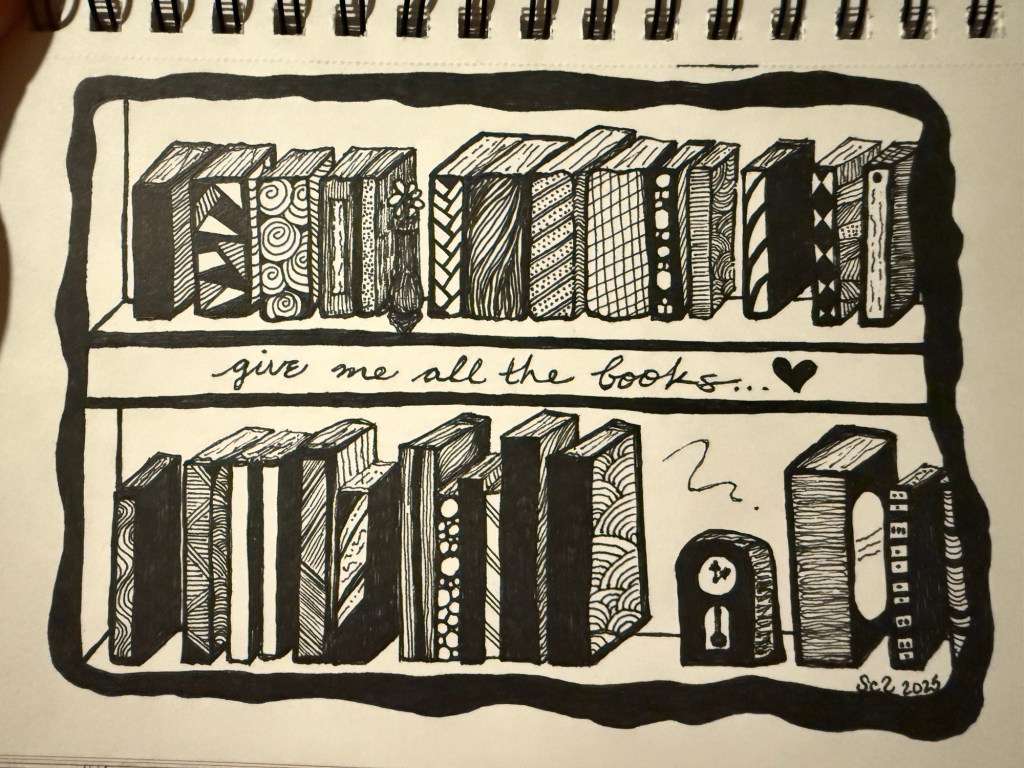
Give Me All the Books
Original hand drawn doodle – Sept. 18, 2025
And then there’s the bookshelf. Oh, the bookshelf! As someone who loves words, who sees books as portals to other worlds, this doodle speaks my language. Each book is unique – different patterns, different textures. Just like people, just like experiences.
The little heart, the playful “Give me all the books…” – it’s a declaration of love. Not just for books, but for stories, for learning, for the endless possibilities contained in pages.
The Practice of Showing Up
What I love most about these daily doodles is the practice itself. It’s not about creating something perfect. It’s about showing up. About putting pen to paper. About allowing creativity to flow, whether it results in something “frame-worthy” or not.
In a world that often demands perfection, daily doodles are an act of rebellion. They say: I am here. I am creating. I am processing. I am alive.
Spiritual Practice in Black and White
For me, these aren’t just drawings. They’re a form of prayer. A form of meditation. A way of processing the world, of paying attention, of being present.
Each line, each pattern is a moment of mindfulness. A breath. A prayer. A reflection.
What does your daily creative practice look like? How do you show up for yourself, even when (especially when) the world feels chaotic?
What a day to capture for a “day in the life” post! Some Mondays are quiet and predictable – this was not one of those Mondays.
The biggest news: Aspen just finished her training and started her insulin pump today! I’m practically bouncing with excitement for her. This is such a huge step in managing her Type 1 diabetes, and watching her take charge of this new technology has me feeling all the proud mama feelings. It’s going to be an adjustment period as we both get used to the new routine, but I have such a good feeling about this change.
Speaking of changes and adjustments – I’ve got a steroid injection scheduled for Wednesday morning to help with these persistent headaches and pain issues.
With headaches, most activity has downshifted to simple projects and decompressing to keep tension away. This was a fun drawing to get lost in for a while. 💙
Fingers crossed it provides some relief. It’s one of those medical procedures that feels small but could make a big difference in daily life. Here’s hoping!
There’s also some excitement brewing that I can’t share just yet (shh – no telling!), but let’s just say the end of this week might bring some good news. Sometimes you need those little mysteries to look forward to, you know?
The September market got cancelled due to a family emergency for the sponsor, which honestly was probably a blessing in disguise on how scheduled fell given everything else happening. They’ll be back in October, but I’m planning to wait until November to jump back in. Sometimes the universe has its own timing.
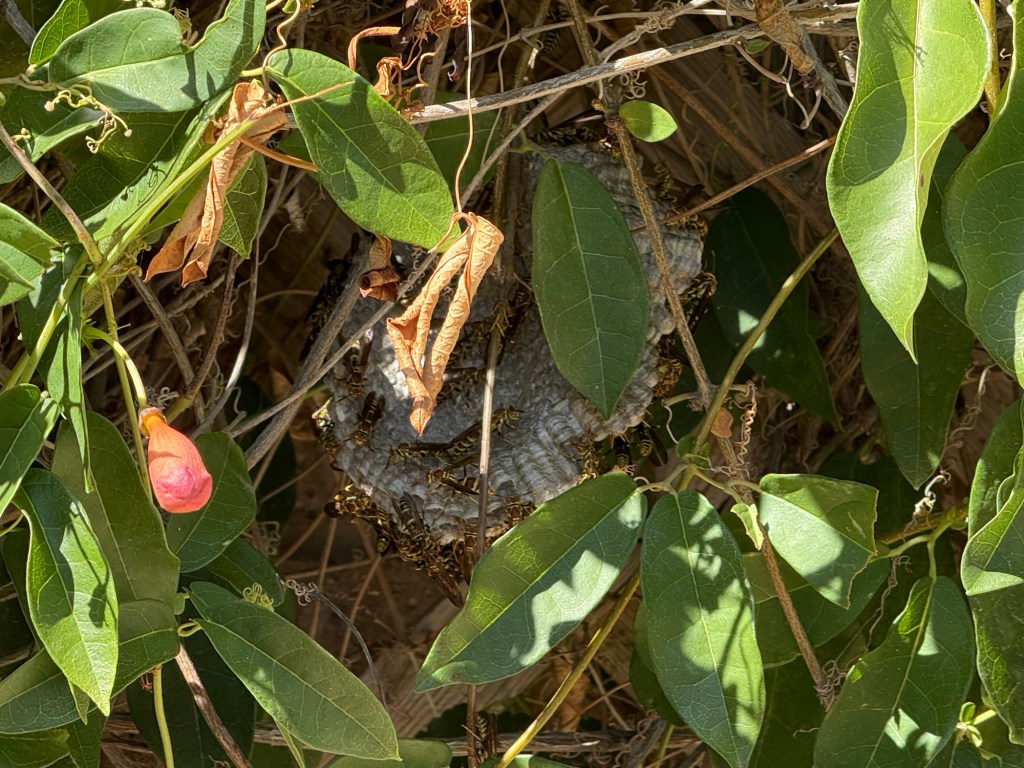
And then there was the wasp situation. Y’all. I discovered a hidden nest out front with 20+ wasps just hanging out like they owned the place. I am beyond grateful for God’s protection – that could have been a seriously nasty accident waiting to happen. But it’s definitely put my front yard garden projects on hold until they relocate somewhere else. *Sigh.* I finally had the energy and motivation to tackle some outdoor projects, and then nature said “not so fast.” 😜 Must be a sign to focus on other things right now.
Taking residence in our thick trumpet vine hedge, I didn’t see them while fussing with overgrowth. Came back later and realized just how lucky I had been. 😳
When life hits you with this much at once – new medical equipment, upcoming procedures, mystery excitement, cancelled plans, and surprise wasp neighbors – it’s easy to feel frazzled. But I’m learning that it’s exactly in these moments when taking time for the small blessings makes all the difference.
Aspen mastering her pump training. Protection from what could have been a painful wasp encounter. A quiet morning with coffee before the day got crazy. The anticipation of good things coming. Even the market cancellation giving us space to breathe.
It’s all about perspective, isn’t it? Some days you’re dancing in the kitchen to random songs, other days you’re dodging wasps and celebrating medical milestones. Both are part of the beautiful, messy, unpredictable rhythm of real life.
Wednesday’s procedure, then rest and recovery. Sometimes that’s exactly what the week calls for.
*How do you find those small blessings when life gets overwhelming? I’d love to hear your strategies for staying grounded in the chaos.*
I haven’t had a true painting session in about two months. 🫣
There, I said it. The woman who has her own painted art all over her home and office from over the last 9 years, doodles zentangles and hand lettered designs, plus pops color and creativity in nearly everything, hasn’t touched paint in two months. And you know what? It’s not the first time, it won’t be the last, and that’s perfectly okay. 🧡
Here’s what I’ve learned about creative overload – and really, any kind of mental overload that makes the things we usually love feel suddenly impossible.
When Complex Becomes Overwhelming
My painting practice isn’t just about making pretty things. It’s where I connect with God, process life’s complexities, and find that flow state where my brain can run on autopilot and sort through everything swirling around in there. It’s where I retreat to rejuvenate my mind, heart, and soul.
But lately, even thinking about setting up paints feels overwhelming and frankly, exhausting. The decisions – which colors, what surface, what technique – that used to energize me now feel like too much. My brain is already working overtime processing life transitions, health challenges, family coordination, and all the mental load that comes with daily responsibilities.
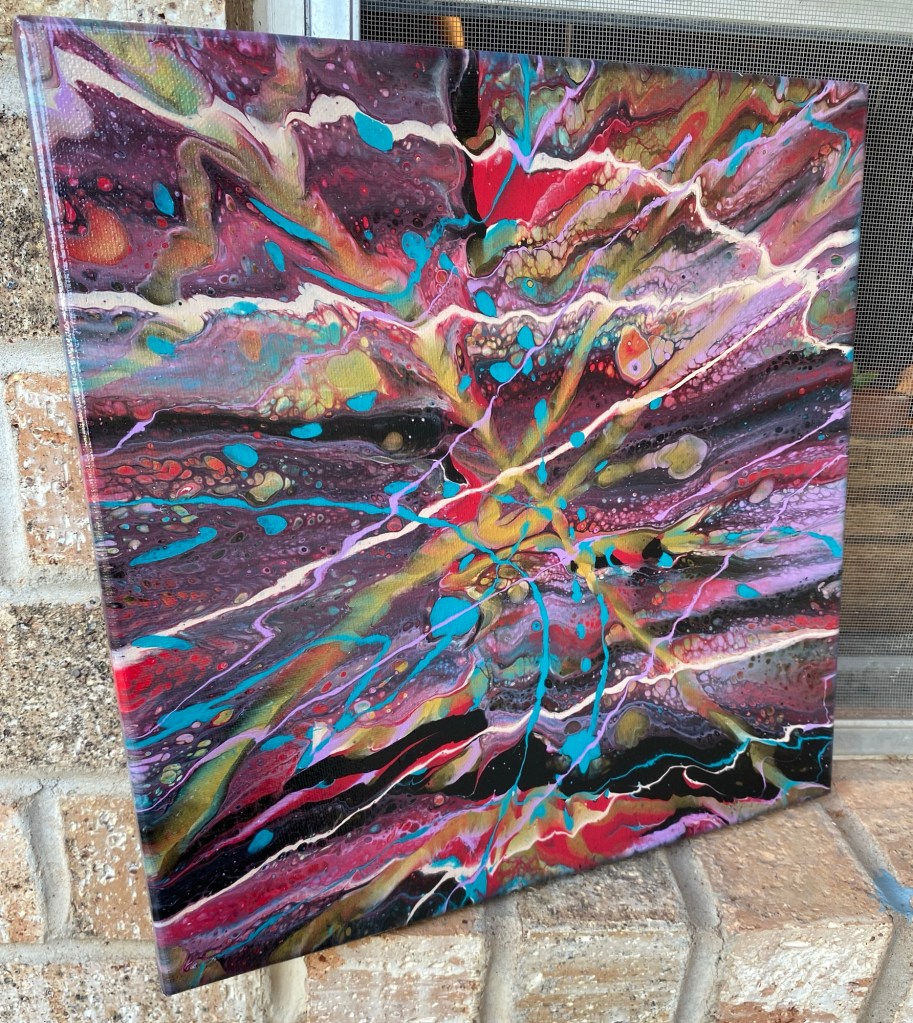
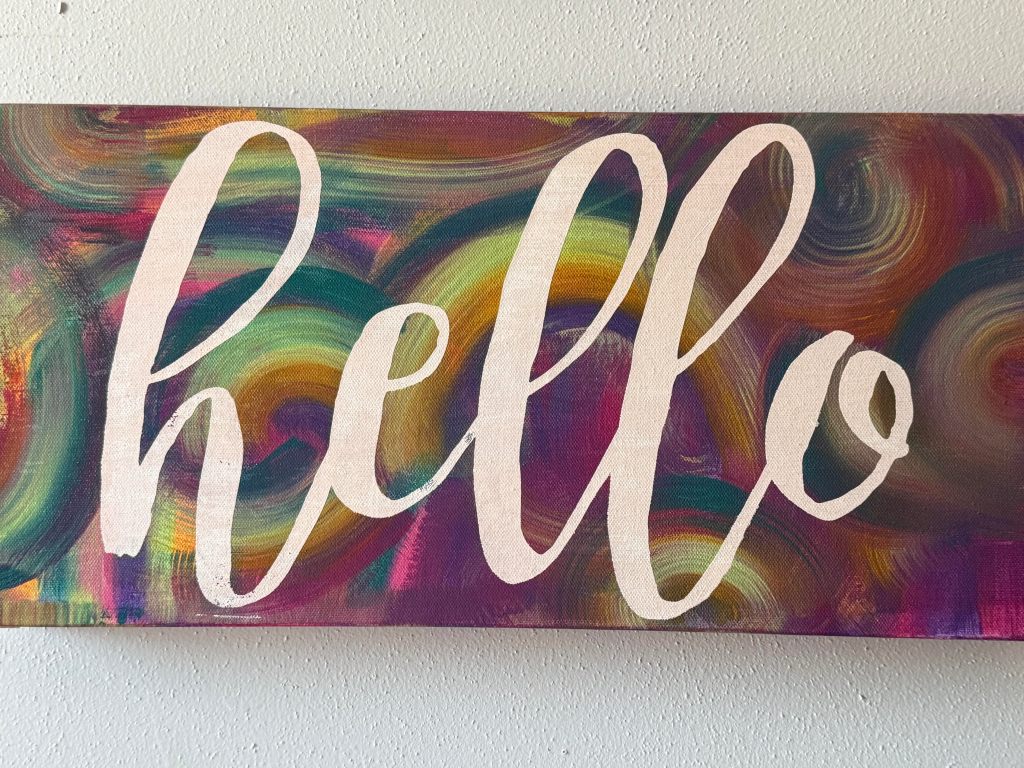
“Cross Out the Noise”; one of my original paint pours that perfectly matches the overload when ideas, to-do lists, and responsibilities crash into each other – all shouting for equal attention.
Now, people might point to my full-time church work as the culprit for this overload. And yes, ministry leadership adds its own complexity. But here’s the thing – my church work actually fulfills needs for spirituality, connection with friends, and being productive. It’s not the villain in this story.
I learned what true work overwhelm felt like with previous employers during my college days, when there was no work-life balance and my job drained rather than filled me. This is different. This is simply a season where I’m carrying more mental load than usual, and it can happen regardless of whether you love your work or not.
The Background Noise Problem
You know that feeling when your brain won’t shut off? When you’re at work but thinking about home ideas, and at home but processing work projects? That constant background mental noise that never quite settles?
That’s cognitive overload, and it happens in seasons of life when we’re carrying more than our usual mental load. It’s not necessarily about having a “bad” job or too much work – it’s about the cumulative effect of managing multiple life areas simultaneously.
Without my usual painting sessions – my brain’s primary processing time – all that mental noise has nowhere to go. It just keeps cycling in the background, making it hard to be fully present anywhere.
Simple Saves the Day
So I’ve been doodling. Zentangles. Simple black ink on white paper. Repetitive patterns that don’t require color decisions or complex compositions.
And guess what? It’s working.
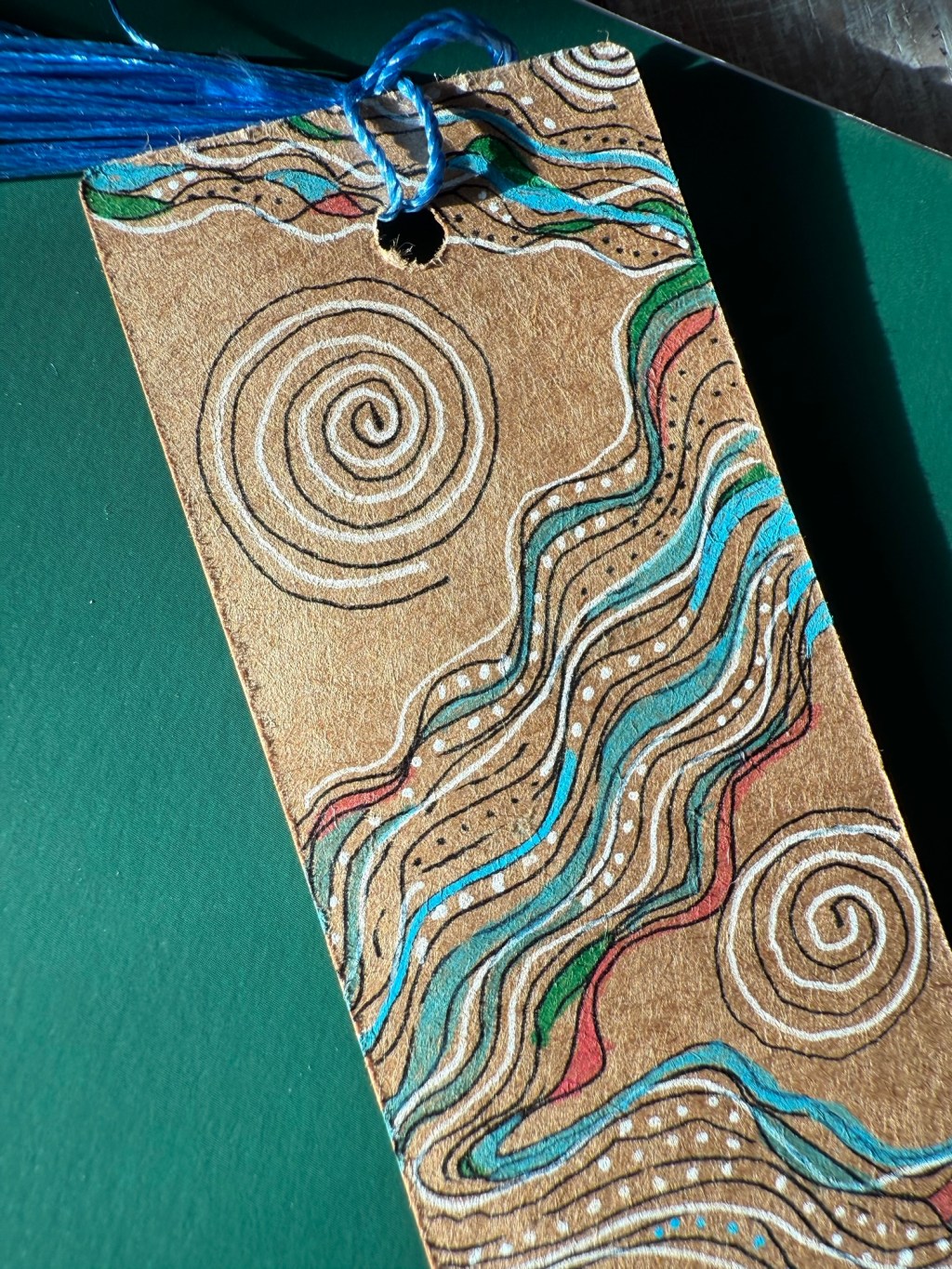
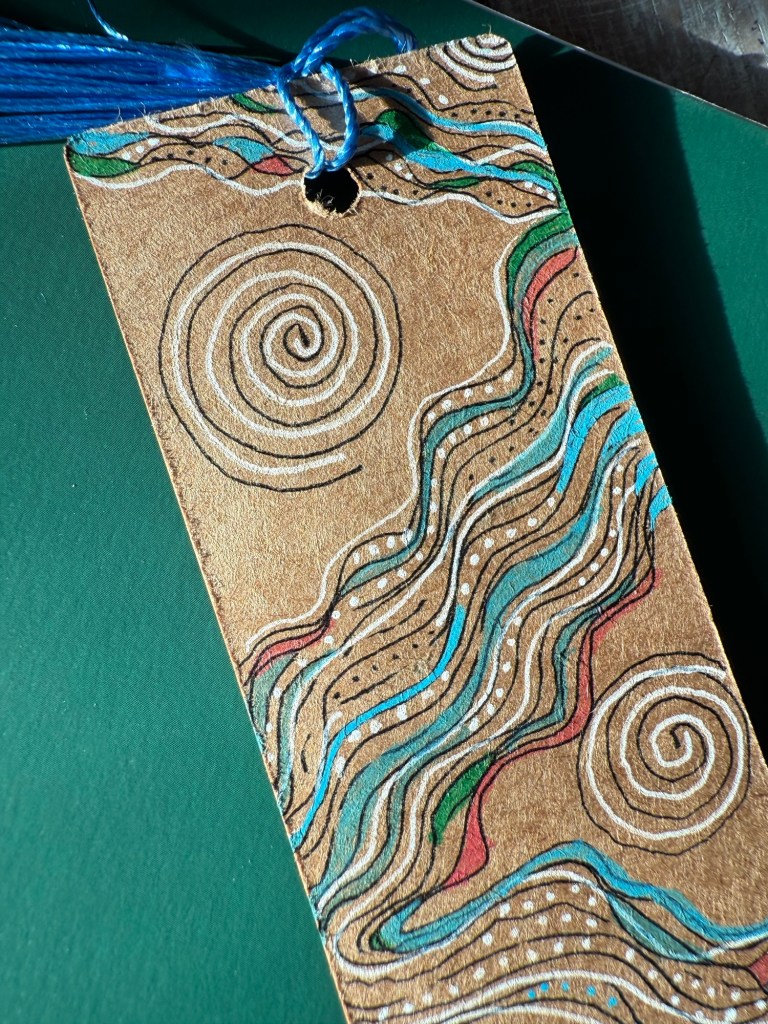
Swirls and waves with minimal color adorn this brown cardstock bookmark – free flowing calm in doodle form 💙
Those meditative, repetitive patterns are giving my brain the flow state it’s been craving without the cognitive load that painting requires right now. The wave patterns I love creating, the simple geometric designs, the mindful repetition – it’s all there, just in a more accessible form.
Permission to Adapt
This isn’t just about art. It’s about recognizing when our usual practices – the ones that normally fill us up – become too much for our current season.
Maybe your morning devotional routine feels too long, so you switch to one verse and a breath prayer.
Maybe your exercise regimen feels overwhelming, so you take walks instead of structured workouts.
Maybe your elaborate meal planning feels impossible, so you embrace simple, nourishing foods that don’t require complex decisions.
It’s taking the things that usually bring you joy and fulfillment into a narrower focus, eliminating the overwhelm from decision fatigue but embracing the core of what gives you back some spark.
The Wisdom of Seasons
There’s wisdom in adapting rather than abandoning. Instead of giving up creativity entirely because painting feels too hard, I’m meeting my creative needs where they are right now. The spiritual connection, the meditative processing, the satisfaction in completing a design – it’s all still there, just in simpler form.
This season won’t last forever. My brain will settle, the overload will ease, and I’ll return to painting when it feels nourishing instead of overwhelming. But for now, I’m honoring where I am instead of forcing where I think I should be.
What Simple is Calling You?
If you’re in a season where your usual practices feel too hard, what simple version might serve you right now?
What would it look like to adapt instead of abandon?
What flow state is available to you in this season, even if it’s not the one you’re used to?
Sometimes the most creative thing we can do is choose the path that actually serves us, rather than forcing the path that drains us.
Your brain – and your soul – will thank you for the grace.
What simple practice is calling to you in this season? I’d love to hear how you’re adapting your routines to meet yourself where you are.
“Can you take on one more thing?” seems to be the unofficial motto of busy seasons.
It happens all the time: “Do you have a minute?” “You’re better with computers than me – can you help me?” “I know you like this kind of art stuff and I would love to have something like this. Can you make me one?”
It’s interesting how fast people delegate things to one another, without even realizing they do it. And as a recovering people-pleaser and proactive do-er, I fall into the unintentional trap every single time.
When Helping Becomes Overwhelming
Case in point: at a group activity recently, a conversation was started about setting up a speaker. The group talking asked me on an aside if I knew anyone to cover a day and I happened to have a lead for them. “That’s great – go ahead and set it up and let us know what day works best.” Suddenly, I’m cast as the scheduler to coordinate this event and I realize another “yes” seems to have been given.
This is just one of many daily interactions, some that form in a similar way and others that are my own doing. Like when you have an idea and brainstorm with someone and you’re throwing ideas back and forth. The conversation goes from “I” of the initiator for the project to “we” and you’re recruited to doing the project.
While these sound like points of just being helpful to someone or running with all the ideas you helped come up with, they are all still yeses and not ones initiated yourself.
The Self-Imposed Yeses
Add to it the yes you set up yourself: Yes, I can make that doctor appointment at that time and day. Yes, I’m the parent at home that night so I’ll make dinner plans. Yes, I’ll take the car for service regularly. Yes, I want to maintain my health so I’ll stick to this activity.
These aren’t bad things. In fact, they’re all good things. Necessary things. But here’s what I’m slowly learning: every yes to something good might be a no to something better. Every commitment I make affects not just my schedule, but my energy, my family time, and my ability to show up fully for the things that matter most.
The Stewardship of Saying No
Saying no isn’t selfish – it’s stewardship. It’s being honest about our capacity and honoring the commitments we’ve already made.
But knowing this and living it? Two completely different things.
Still working on this one. Some days I nail it, other days I overcommit and remember why boundaries matter. Some days I catch myself before I automatically say yes to that “one more thing.” Other days I find myself coordinating events I never intended to coordinate, wondering how I got there again.
Learning to Redirect Instead of Taking On
I’m getting better at this, though. Recently, when that speaker situation came up, I offered to provide the contact information so they could reach out themselves instead of me becoming the coordinator. When someone wanted to brainstorm program ideas, I was clear upfront: “I’m happy to help form ideas, but I don’t have the bandwidth to activate and carry them out – volunteers would be needed.”
Just this week, someone came asking questions about a program and then wanted me to reach out to a resource to revamp what we have in place. I pivoted it back to them: “You’ll want to visit with the staff member who oversees that program to discuss whether this new resource would be beneficial.” I took myself out of needing to do another follow-up task.
Breaking the One-Stop-Shop Pattern
Here’s what I’m realizing: when I’m working with so many people, I’m constantly having to discern where to put my energy and not fall into another character flaw of mine – doing everything myself. Yes, I can and would get it done. Yes, I often end up housing all the different pieces so people have someone to check in with. But it’s not sustainable.
No matter how good and positive these requests are, they’re still another piece. And when you’re juggling church administration, family life, art business, and everything else, every additional piece matters.
What I’m learning is that when I redirect people to the right resources, everyone wins. They get help from someone who specializes in that area, the systems work better, and I can focus on what I’m actually called to do. It’s not about pushing people away – it’s about connecting them with the best person for their specific need.
The Hidden Cost of Good Opportunities
What I’m learning is that every commitment – even the good ones, even the ones that align with my gifts and passions – has a cost. Not just time, but emotional energy. Mental bandwidth. The ability to be present for my family. The space to hear what God might actually be calling me to instead of just responding to what’s being asked of me.
When I automatically say yes to coordinating that speaker event, I’m saying no to something else. Maybe it’s saying no to a quiet evening with Aspen. Maybe it’s saying no to time I need to recharge so I can show up fully at work. Maybe it’s saying no to the creative project that’s been waiting patiently for my attention.
Learning to Pause and Clarify
I’m trying to build in a pause now. When someone asks, “Can you take on one more thing?” I’m learning to say, “Let me check my calendar and get back to you.” Not because I don’t want to help, but because I want to help well. I want to give a thoughtful yes or a gracious no, instead of an automatic response that I’ll regret later.
I’m also learning to clarify roles upfront. “I’m happy to help you think through this, but I can’t take on the execution right now.” It feels awkward at first, but it’s honest. And it prevents that slow slide from brainstorming partner to project manager.
The Question That Changes Everything
Here’s the question I’m trying to ask myself more often: “What’s one thing I need to say no to this week?”
Maybe it’s that extra project that sounds interesting but isn’t essential. Maybe it’s the social obligation that feels more like duty than joy. Maybe it’s the self-imposed standard that’s adding pressure without adding value. Maybe it’s taking on someone else’s follow-up task when I could redirect them to the right person instead.
Because here’s what I’m discovering: when I protect my capacity, I can show up better for the things that truly matter. When I honor my limits, I can serve from a place of abundance instead of depletion. When I say no to good things, I create space for the best things.
A Word to Those I’ve Said No To
If I’ve said no to you recently, or redirected you to someone else, please know it’s not coming from a place of not wanting to help or not caring about what you’re doing. It’s coming from a place of preservation – learning to focus my sights directly on what my path is from God, learning to honor moments of pause, and working on honoring commitments that build my relationship with my family.
A no now could be a yes in a different season. Don’t give up on me, but do give me grace as I learn to steward my capacity better.
I’m discovering that sometimes the most loving thing I can do – for you, for my family, for the work God has called me to – is to be honest about what I can and can’t take on right now. When I redirect you to the right person or say no from this place, I’m actually protecting my ability to say a wholehearted yes when the timing is right.
Still Learning
I won’t pretend I have this figured out. This week alone, I’ve probably said yes to three things I should have paused on. But I’m getting better at recognizing the pattern. I’m getting better at asking the hard questions before I commit. I’m getting better at redirecting instead of automatically taking on.
And maybe that’s enough for now. Maybe learning to say no well – and redirect strategically – is like any other skill. It takes practice, grace for the mistakes, and the willingness to try again tomorrow.
What’s one thing you need to say no to this week? Or what’s one task you could redirect to the right person instead of taking it on yourself? I’d love to hear how you navigate the balance between serving others and protecting your capacity.
I’ve been thinking about that For King & Country song “Burn the Ships” lately, and how it connects to one of the most decisive moments in history. When Cortés landed in Mexico, he ordered his ships burned. No retreat. No backup plan. No “let’s see how this goes and maybe head home if it gets tough.”
Just forward. Just faith. Just the mission ahead.
The Comfort of Backup Plans
There’s something both terrifying and liberating about that image. Because if we’re honest, most of us live with one foot in our calling and one foot in our escape route. We say yes to what God’s asking of us, but we keep our old patterns, our familiar comforts, our “just in case” alternatives right within reach.
I know I do this. When God calls me toward something uncomfortable – deeper trust, harder conversations, staying put when I want to run – I find myself unconsciously keeping those ships in the harbor. The ship of “I can handle this myself.” The ship of “maybe there’s an easier way.” The ship of “what if I just tried this other thing instead?”
When Quiet Feels Like Permission to Flee
Here’s what I’ve noticed about myself: when things get quiet in my spiritual life, when there’s no dramatic calling or obvious next step, I get antsy. That stillness starts feeling like permission to shake things up, to chase after something that feels more immediate, more controllable.
Maybe it’s a new project that promises quick results. Maybe it’s diving headfirst into some self-improvement plan that makes me feel productive. Maybe it’s pursuing recognition or success in ways that seem harmless but slowly pull my focus away from what I know to be true and good.
The problem isn’t the desire for growth or improvement. The problem is when those desires become my master instead of my offering to the Master I’m supposed to be serving.
The Ships We Need to Burn
Hebrews 11:25 talks about choosing “to be mistreated along with the people of God rather than to enjoy the fleeting pleasures of sin.” But maybe the verse that hits closer to home is Matthew 6:24: “No one can serve two masters. Either you will hate the one and love the other, or you will be devoted to the one and despise the other.”
The ships I need to burn aren’t always dramatic or obviously sinful. They’re the subtle alternatives that whisper “this might be better” when God is asking me to stay the course. They’re the backup plans that promise easier paths when the calling requires uncomfortable growth.
Success. Recognition. The illusion of control. The addiction to “doing something” when God might be asking me to simply be still and trust.
The Daily Decision
Here’s what I’m learning: burning ships isn’t a one-time dramatic gesture. It’s a daily choice. Every morning, I have to decide again whether I’m going to trust God’s timing and direction, or whether I’m going to keep those escape routes ready just in case.
When the calling feels uncomfortable, do I lean into it or start looking for alternatives?
When things are quiet, do I rest in that space or immediately start stirring up activity to feel more in control?
When God’s plan seems slow or unclear, do I wait with open hands or start making my own plans?
The Freedom in Surrender
There’s something beautiful that happens when you finally burn those ships. When you stop serving the master of your own timeline, your own comfort, your own version of success. When you choose to trust that God’s calling – even when it’s uncomfortable, even when it’s quiet, even when it doesn’t make sense – is better than any backup plan you could devise.
It’s scary. But it’s also incredibly freeing.
Because when you’re not constantly looking over your shoulder at other options, you can finally move forward with your whole heart. When you’re not dividing your energy between God’s plan and your backup plans, you can pour everything into what He’s actually asking of you.
The Invitation Forward
Maybe you know what ships you need to burn. Maybe they’re obvious – the habits, relationships, or pursuits that are clearly pulling you away from God. Or maybe they’re subtler – the “just in case” alternatives that seem innocent but keep you from fully surrendering to His plan.
Either way, the invitation is the same: burn the ships. Choose today to serve one Master. Trust that His plan – even when it’s uncomfortable, even when it’s quiet – is better than any alternative you’re keeping in reserve.
The journey forward might be uncertain, but at least it’s forward. And sometimes, that’s exactly where faith begins.
What ships do you find yourself reluctant to burn? What backup plans keep you from fully surrendering to God’s calling in your life?
You know that feeling when the Holy Spirit keeps nudging you to do something, and you keep finding creative ways to ignore it? Yeah, that’s been me for months now.
The nudge? Reach out to people. Reconnect. Stop being so worried about looking stupid and just… connect.
So today I did the thing. I sent out friend requests and page invites to basically everyone I’ve ever met. And now I’m sitting here like, “Oh no, what did I just do?”
The List That Made Me Realize How Blessed I’ve Been
As I was going through my contacts, adding people from every season of my life, I started seeing this beautiful pattern emerge. There were classmates from my overseas school days and my stateside high school years. Former grocery store coworkers from when I was just starting out. Team members I supervised, managers who supervised me. People I met at vendor events when I was brave enough to set up my first art booth. And now, my church family at Aldersgate – both congregation members and the amazing people I work with in my administrator role.
Looking at this list, I realized something pretty incredible: I’ve been blessed to cross paths with some truly amazing people. Each one of these connections has been a thread in the tapestry of who I am today. They’ve influenced my art, shaped my perspective, and helped me grow in ways I probably didn’t even realize at the time.
The Vulnerability of Putting Yourself Out There
Here’s the thing about sharing your art and your heart online – it’s terrifying. Every post feels like standing naked in front of a crowd, hoping someone will say “hey, that’s beautiful” instead of “what were you thinking?”
But during my prayer journaling this morning, I felt like I got a clear answer to my fear: the only way past the scary feeling is to do the scary thing. You find bravery by acting brave, even when your insides are doing gymnastics. You acclimate to the fear by facing it. And eventually – hopefully – the fear fades.
That doesn’t make hitting “send” any easier, though.
From Wallflower to… Still Feeling Like a Wallflower
I keep telling myself I’m not still that super awkward kid I was in high school, but honestly? Some days I feel exactly like her. The one who wanted to connect but didn’t know how. The one who had thoughts and ideas but was too scared to share them.
The difference now is that I’m choosing to share anyway. My Thursday night Facebook Live art sessions, my blog posts about faith and creativity, my zentangle bookmarks that I hope bring peace to someone’s reading time – it’s all me saying “here I am, awkward edges and all.”
What I’m Really Hoping For
When I sent out those invites today, I wasn’t just asking people to follow my art page. I was saying, “Hey, remember me? We shared some space in this world for a while, and that mattered to me. Want to see what I’m creating these days?”
I’m hoping my art can add a bright pop of color to someone’s social media feed when they need it. I’m hoping the prayer prompts and spiritual reflections I share might be exactly what someone needs in that moment. But mostly, I’m hoping people can see that every person we encounter – even briefly – has the potential to influence us in beautiful ways.
Maybe you were the coworker who showed me kindness during a tough shift. Maybe you were the classmate who made me laugh when I needed it. Maybe you were the church member who welcomed me with genuine warmth. You might not think you played a big role, but you did. You were part of my story.
The Invitation (And My Nervous Hope)
So if you got one of those friend requests or page invites today, know that it came with a side of “please don’t think this is weird” and a whole lot of hope. Hope that we can reconnect. Hope that we can talk about art and life and faith and whatever else comes up. Hope that the connections we made years ago can bloom into something new.
I’m still that person who second-guesses herself all the way through hitting “send.” But I’m also learning that some of the best things in life happen when you do the scary thing anyway.
Thanks for being part of my journey, whether you realize it or not. I’m grateful for every encounter, every conversation, every moment that helped shape who I’m becoming.
Now, let’s see what happens next. *nervous laugh*
Are you someone who struggles with reaching out to old connections? I’d love to hear about it – sometimes knowing we’re not alone in the awkwardness makes it easier to be brave.
This morning I got a message that broke my heart in a way I wasn’t expecting.
Someone had seen my work, expressed genuine interest, and asked for my Etsy link. Normal stuff, right? But then they followed up with, “Do you have legit tracking that you send?”
And it hit me. They weren’t questioning my professionalism – they were protecting themselves. Someone had hurt them before. Some scammer had taken their money, maybe sent them nothing, or worse. Now here they were, wanting to support a real artist but having to ask if I was… real.
The Scammer Playbook (And Why We’re All Tired of It)
If you’re an artist selling online, you know exactly what I’m talking about. The messages start the same way every time:
“I love your work! Can you send me your Etsy link?”
Your heart jumps a little. A potential sale! Someone who appreciates what you create! Then comes the pivot:
“I can’t purchase through Etsy, can you send it directly?”
“I need you to send me a piece first for account verification”
“I want to promote your work on my page – just need your banking info”
“My assistant will send you a check for more than the amount, just send the difference back”
Every single time, that initial excitement gets crushed. Because you know. You’ve learned to recognize the pattern. Another scammer trying to prey on artists who are just trying to share their gifts with the world.
The Ripple Effect That’s Breaking My Heart
But here’s what really gets me – it’s not just about the scammers. It’s about what they’re doing to everyone else.
That person who asked about “legit tracking” this morning? They’ve been burned. Maybe multiple times. Now they have to approach every artist with suspicion. They can’t just fall in love with a piece and buy it. They have to investigate first. Protect themselves first.
And honestly? I don’t blame them.
As artists, we’ve had to become detectives too. Every inquiry gets the side-eye now. Is this person real? Are they actually interested in my work, or are they about to ask me to send them something “for verification”?
It’s exhausting. And it’s heartbreaking.
What Real Actually Looks Like
Here’s the thing – legitimate artists aren’t trying to work around established platforms. We WANT you to use Etsy, or our website, or whatever secure payment system we’ve set up. We want you to have buyer protection. We want you to feel safe.
Real artists:
Use established platforms with buyer protection
Provide tracking information through those platforms
Never ask for your banking information
Don’t need you to “verify” anything by sending money or products first
Are happy to answer questions about our process, materials, and shipping
When I price my work now, I’m completely transparent – art supplies + shipping material + minimal profit for sustainability (generally $1-$3 for my smaller hand drawn pieces depending on time spent on the piece). That’s it. No hidden fees, no complicated payment schemes. Because authentic art sales shouldn’t be complicated.
The Bigger Picture That’s Got Me Feeling Heavy
This whole situation makes me sad for reasons that go way beyond business. Art is supposed to be about connection. It’s about someone seeing something you created and feeling something. It’s about supporting creativity and bringing beauty into the world.
But now? Now it’s become a game of “are you real or not?”
Every time someone has to ask if my tracking is “legit,” a little piece of the joy gets chipped away. Not because they’re wrong to ask – they’re absolutely right to protect themselves. But because they have to ask at all.
The scammers aren’t just stealing money. They’re stealing trust. They’re stealing the simple joy of “I love this, I want to buy it.” They’re making every interaction start with suspicion instead of appreciation.
Moving Forward (With Hope, Somehow)
I don’t have a magic solution for this mess. The scammers aren’t going anywhere, and the wariness they’ve created is probably permanent.
But maybe we can start somewhere. Maybe we can be extra patient with each other. Maybe buyers can know that real artists understand your caution and won’t be offended by your questions. Maybe artists can be more transparent about our processes and more understanding about the skepticism we encounter.
And maybe, just maybe, we can slowly rebuild some of that trust that’s been broken.
Because at the end of the day, I still believe in the magic that happens when someone connects with a piece of art. I still believe in the joy of creating something that brings light into someone else’s world.
I just wish we didn’t have to verify each other’s humanity first.
What’s your experience been with online art purchases? Have you been burned by scammers, or are you an artist dealing with this same frustration? I’d love to hear your thoughts – the real ones, from real people, in this complicated digital world we’re all trying to navigate.
There’s something both brutal and beautiful about Monday mornings. The weekend’s gentle pace collides with the week’s demands, and suddenly we’re expected to shift gears like it’s nothing.
But what if we approached this transition differently? What if Sunday evenings became our bridge to Monday grace instead of letting Monday morning shock our systems awake?
I’ve been learning to give myself (and my family) a little extra grace on Mondays – not just in the moment, but in the preparation. It’s about creating space for each of us to transition in our own way, honoring the different rhythms that help us feel ready for the week ahead.
Finding Our Family’s Monday Rhythm
Each of us has discovered what we need to feel prepared:
Jay (bless him) thrives on consistency – up and ready at the same time every day with steady routines that keep him grounded. But this also means when something interrupts that flow, it can throw off his whole day.
Aspen has mastered the art of Sunday night prep, giving herself permission to wake a little later and just grab-and-go. She’s figured out how to honor her need for extra sleep while still being ready.
And me? I’ve learned that my Monday grace often happens on Sunday – making sure their routines can flow smoothly, because when Monday starts rocky for them, those stressors ripple through our entire week.
The Ripple Effect of Understanding
This family rhythm-finding has taught me something deeper about grace in leadership too. When we take time to understand each person’s individual stressors and preparation needs, we create space for everyone to show up as their best selves. It’s not about forcing one approach on everyone – it’s about honoring the different ways people reset and recharge.
Monday morning grace looks like acknowledging the transition instead of pretending it’s seamless. It’s okay if it takes a minute to find your rhythm again. It’s okay if your Monday prep looks different from everyone else’s.
What does Monday morning grace look like in your world? How do you honor your own rhythm while creating space for others to find theirs?