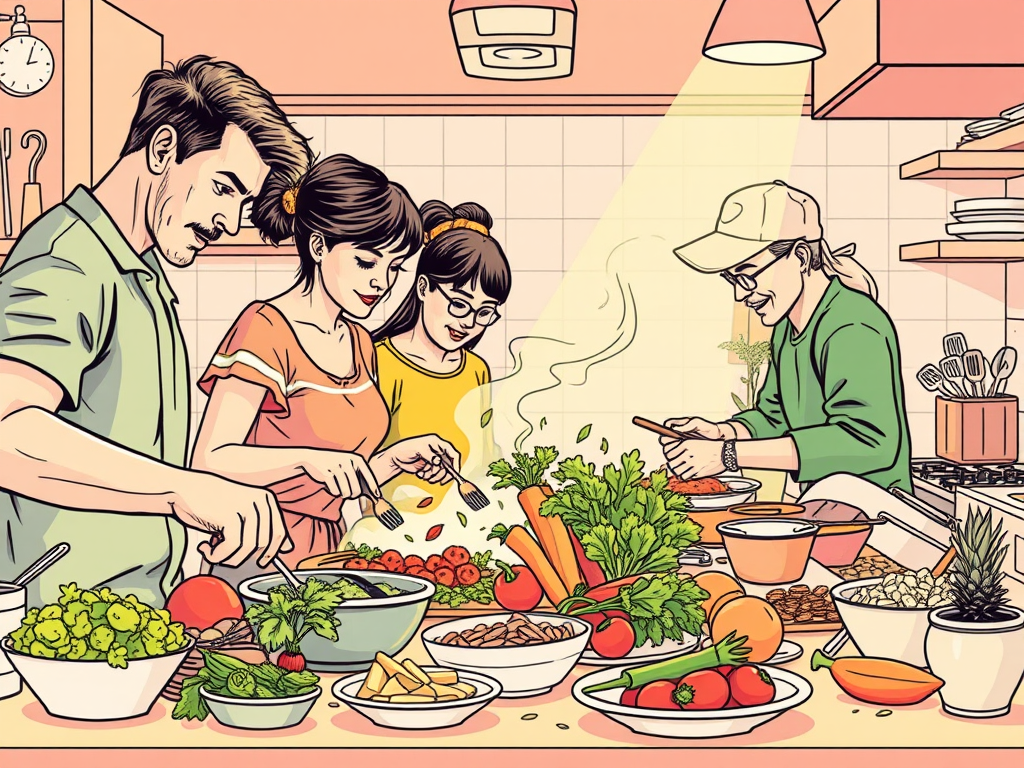
We’ve all been there – weekend grocery shopping with the best intentions, armed with meal plans and fresh ingredients, ready to conquer the busy week ahead. Then Monday hits, and suddenly every carefully planned dinner seems to require more time, energy, or ingredients than you actually have.
Some weeks, elaborate meal planning goes straight out the window. That’s when simple swaps become your saving grace.
Finding Our Own Family Rhythm
I remember a summer evening when Jay and I were sitting down to what was definitely not the Pinterest-worthy family dinner I’d envisioned. While I was internally critiquing our less-than-perfect setup, he reminded me of something important: each family has to find their own rhythm. Whether or not it matches the cultural image of how things “should” look doesn’t matter – what matters is meeting our own family’s needs and making it work for us, whatever that ends up looking like.
That conversation shifted everything for me. Instead of beating myself up for not cooking elaborate meals from scratch, I learned to make small upgrades that still nourish without the stress:
Kodiak individual oatmeal and muffin cups instead of full pancake batches (hello, protein boost!)
Pre-cut veggies to speed up weeknight prep
Rotisserie chicken for quick, real-food meals
Frozen veggies that won’t guilt-trip me from the crisper drawer
Bulk prepping basics: hard-boiled eggs, brown rice, slow-cooked seasoned proteins that work with anything
Redefining “Family Dinner”
It’s also meant releasing the Norman Rockwell imagery that used to haunt my kitchen. Our work-and-school-week dinners might happen standing at the counter, or with everyone eating at slightly different times, or with paper plates because nobody has energy for dishes. And that’s perfectly fine.
What matters is being comfortable in our space, having nourishing food, and connecting as a family – even if that connection happens over reheated leftovers.
Perfect is the enemy of good, especially in the kitchen. Progress over perfection wins every time. Grace over guilt creates space for what actually matters.
What’s your favorite healthy swap for crazy-busy weeks? How has your family found its own food rhythm?
I’ve been thinking a lot lately about why I create. Not the surface-level “because I love art” answer, but the deeper question that keeps surfacing during my Thursday night live sessions: Am I creating for joy, or am I creating for purpose?
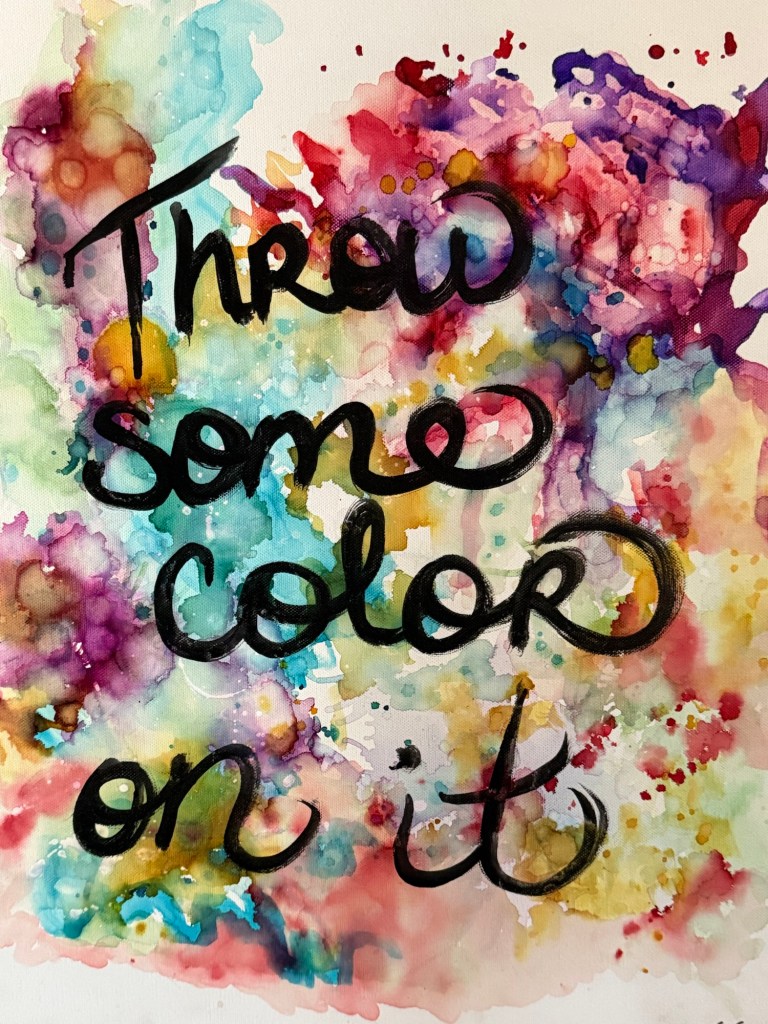
Alcohol ink and acrylic on canvas – 🌟 this is my motto when the world and my mood seem to be swimming in shades of gray… throw some color (and positivity) on it.
It’s a question that’s been dancing around my heart, especially as I’ve shifted SCS Designs toward a more ministry-focused approach. And honestly? I think I’ve been wrestling with a false choice.
The Joy of Creating
There’s this magic that happens when I’m lost in a piece – when the brush moves without my brain overthinking every stroke. It’s pure, childlike flow. The kind of creating where time disappears and suddenly I look up to find I’ve been painting for three hours straight.
This is creating for joy. It’s spontaneous, unplanned, deeply personal. Success isn’t measured by likes or sales, but by how alive I feel in that moment. It’s art as prayer, art as breathing, art as being fully present with God in the process.
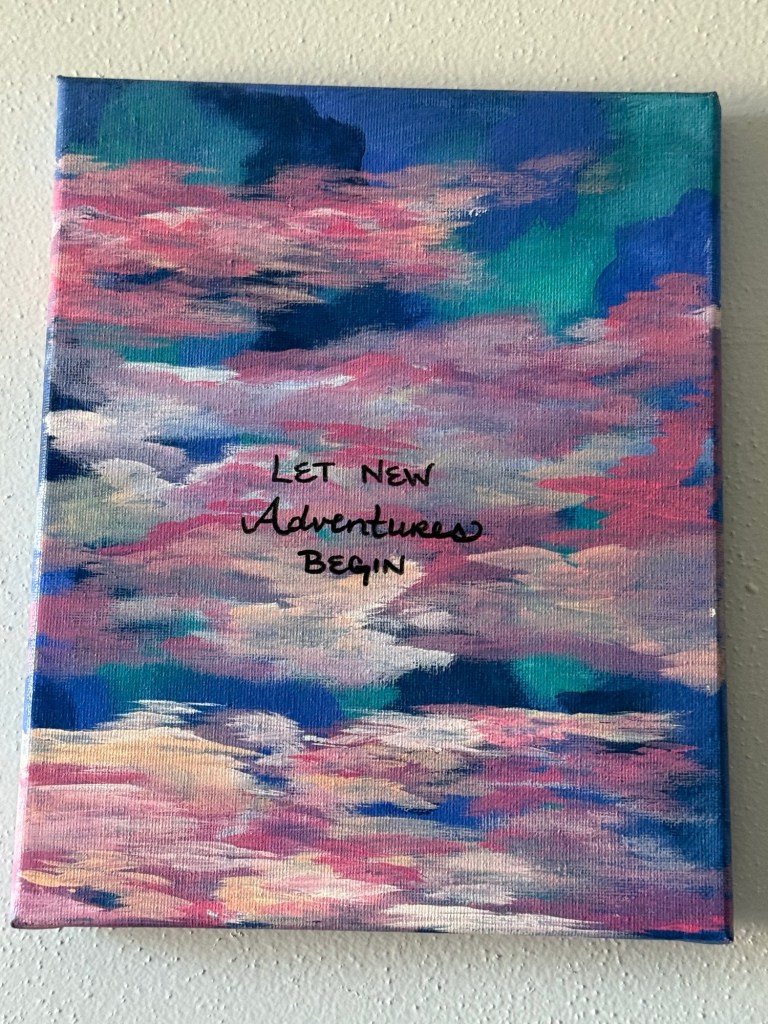
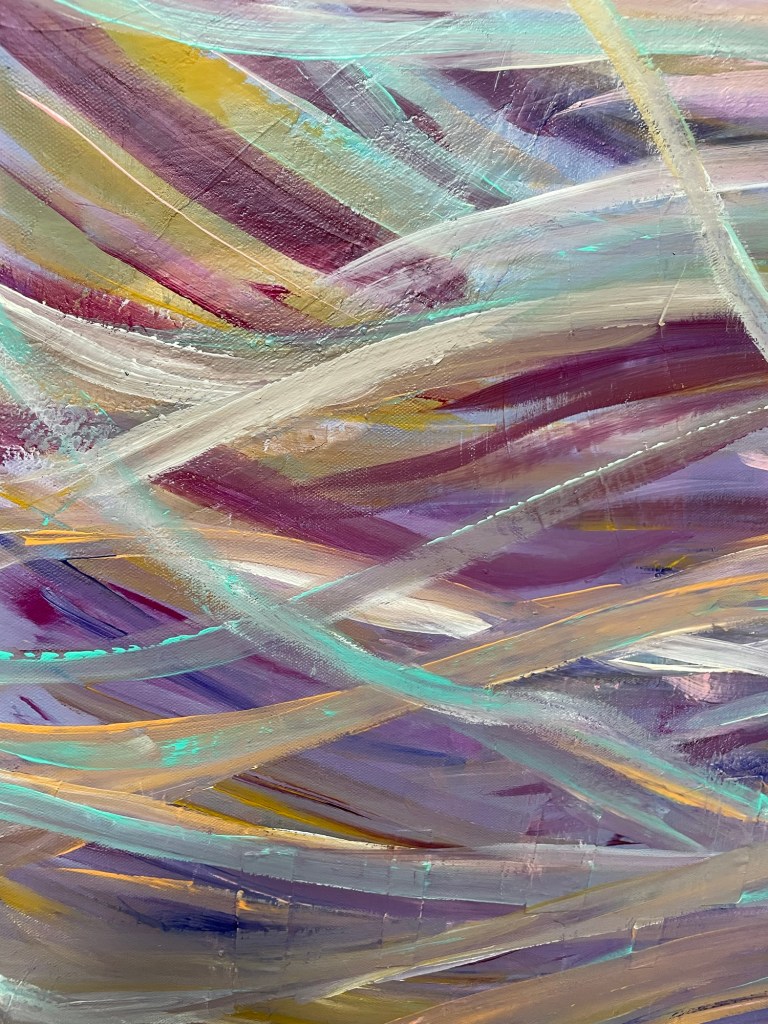
This piece caught me by surprise in the loveliest way. Dabbling with colors and letting my mind wander as I created in a state of flow, this cotton candy sky emerged with whimsy and the call to escape into new adventures.
The Purpose Behind the Paint
But then there’s the other side – the pieces I create knowing someone needs to see them. The zentangle prayer guides born from my own need for spiritual grounding. The scripture art that whispers hope to a weary heart scrolling through Facebook at midnight.
This is creating for purpose. There’s intention behind every decision, every color choice, every word I letter. I’m thinking about who needs this message, how it might land in their day, what healing it might offer. The impact on others becomes part of what fuels the creative fire.
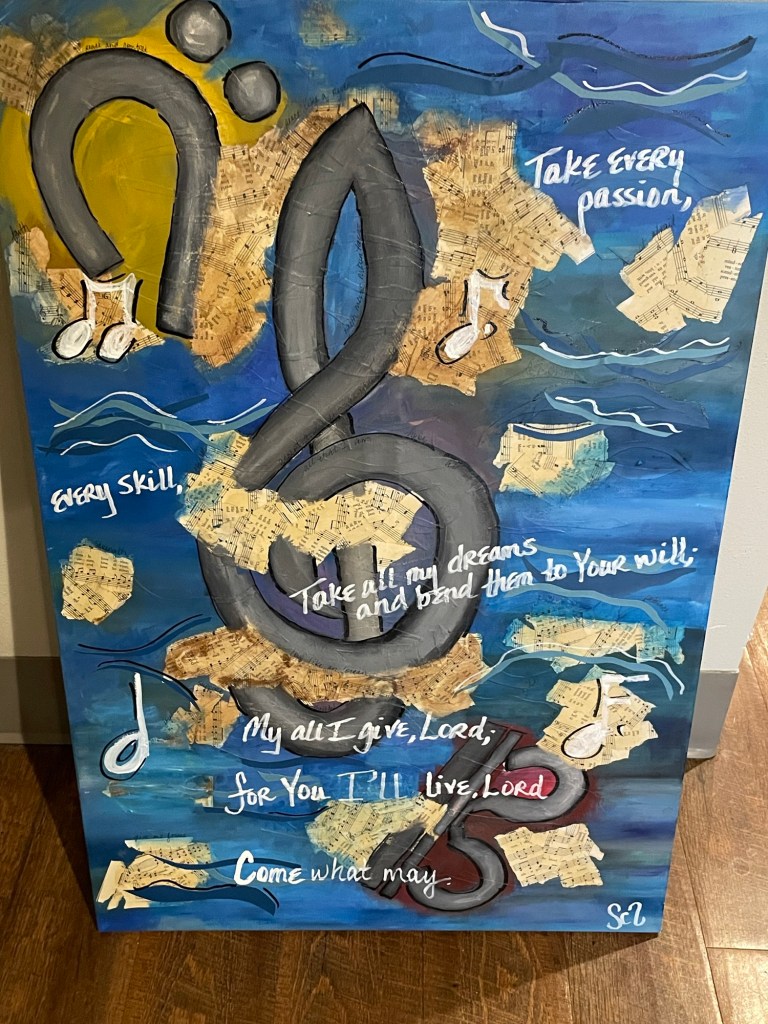
A piece that called to me – this was created for a friend who was considering a music position with our church. It includes the hymn that inspired him during that season “All That I Am”. This piece was specific to his interests, blending music, the hymn refrain, and water to represent his love for diving. And tucked into various places, little prayers and other song lyrics were written to carry the prayer for his peace and confidence with regard to the Music Director position. Here, purpose carried through the creation process to share a special message with him. 🧡
Finding the Sacred Balance
Here’s what I’m learning: joy and purpose don’t have to be at odds. In fact, the most powerful art I’ve created has been when they dance together.
My Thursday live sessions are the perfect example. I create for the pure joy of the process – the meditative rhythm of zentangle patterns, the surprise of watching colors blend on canvas. But I’m also deeply aware that someone watching might need exactly what unfolds in that moment. The joy becomes the vehicle for purpose.
When I made the decision to shift to ministry-over-profit pricing, something clicked. I wasn’t creating just to make money (which can slowly drain the joy) or just for myself (which might miss the deeper calling). I was creating because the act of making art AND sharing it brought both personal fulfillment and served something bigger than me.
The Beautiful Tension
Sometimes I wonder if this tension is actually sacred. Maybe the question isn’t whether to create for joy or purpose, but how to let them inform each other. When what lights me up is exactly what the world needs to see – that’s when art becomes prayer, becomes ministry, becomes exactly what it’s meant to be.
As I sit here tonight, paintbrush in hand and another piece calling to be born, I’m not asking myself which camp this one falls into. Instead, I’m asking: What wants to emerge through me right now? And how can I show up fully – joyfully, purposefully – to whatever that is?
Because maybe that’s where the real magic lives – in the space where joy meets purpose, where personal expression serves something greater, where creating becomes both gift and offering.
What about you? Do you feel a different energy when you’re creating purely for joy versus when you have a specific purpose in mind? I’d love to hear your thoughts in the comments below.
Sometimes the best lessons come disguised as vacation days. Our recent escape to the Ozarks wasn’t just about getting away – it was about remembering how to breathe, how to notice, and how to let life unfold without a rigid schedule dictating every moment.
Highest point in Branson, MO
## **The Journey & Mountain Magic**
The drive to Branson felt like crossing into another world – one where time moved slower and the air tasted different. For my family across the ocean reading this, imagine rolling hills that seem to go on forever, dotted with little cabins and lakes that mirror the sky perfectly. We stayed in a place that felt like a storybook, complete with a porch that begged for morning coffee and evening conversations.
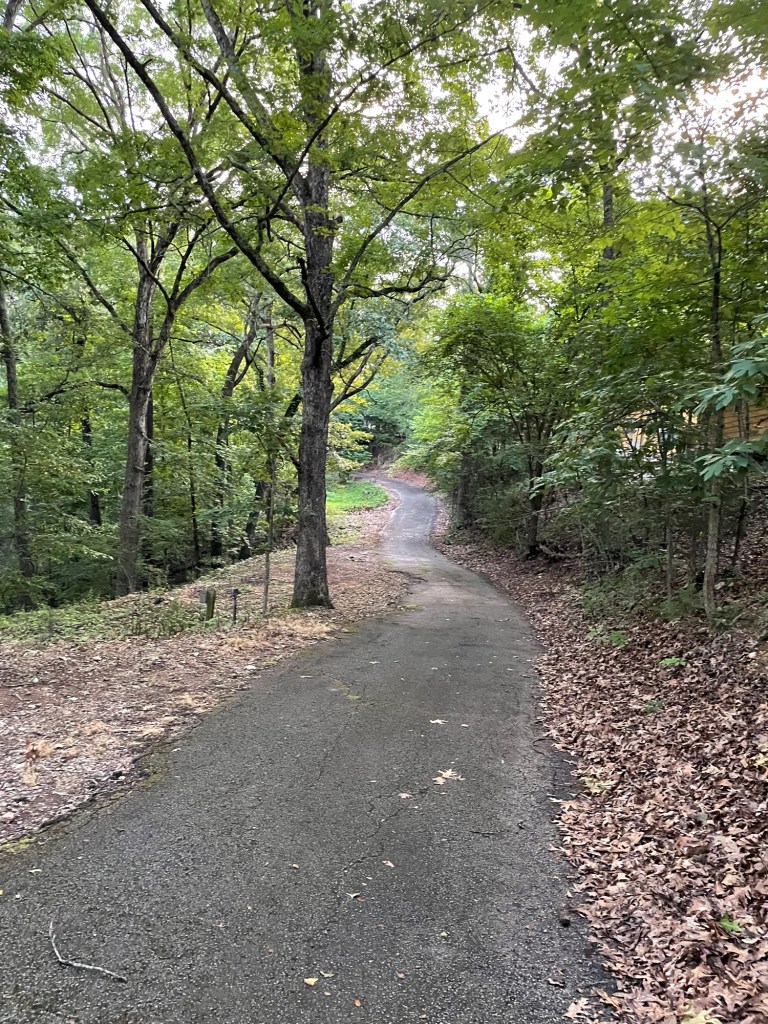
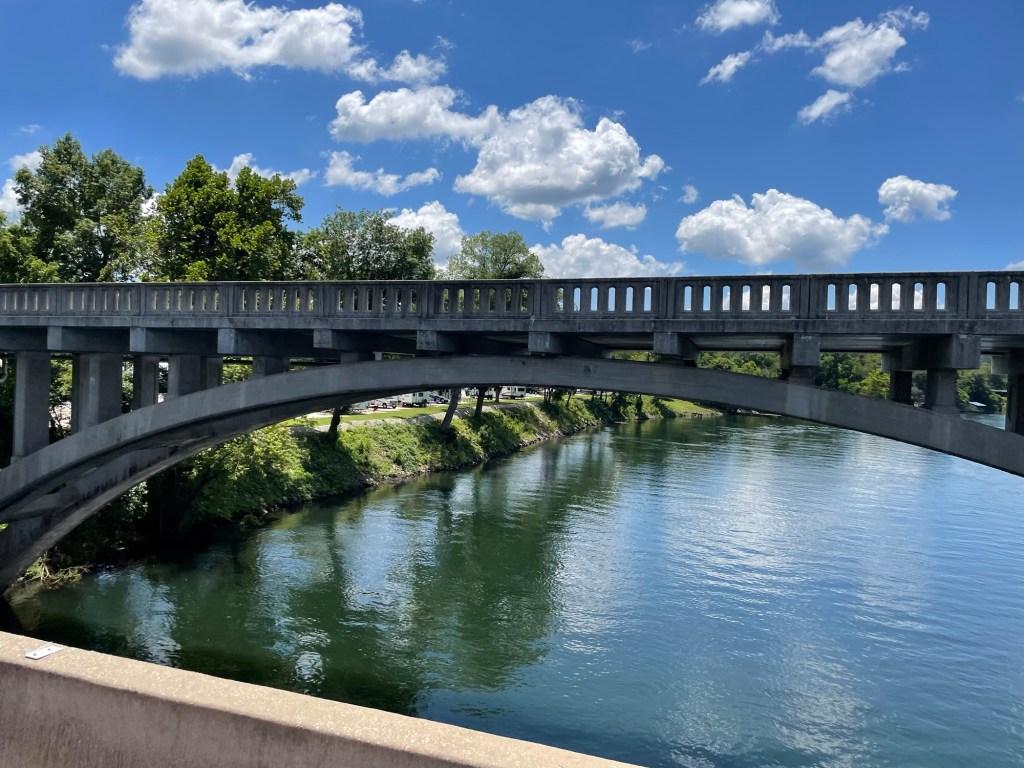
The forest path down from our cabinBranson/Hollister bridge
**David at Sight & Sound Theatre** was pure magic – the kind of production that makes you forget you’re sitting in a theater. The massive stage, live animals, and storytelling that transported us completely out of our everyday world. There’s something about experiencing art at that scale with family that creates memories you can feel in your chest years later.
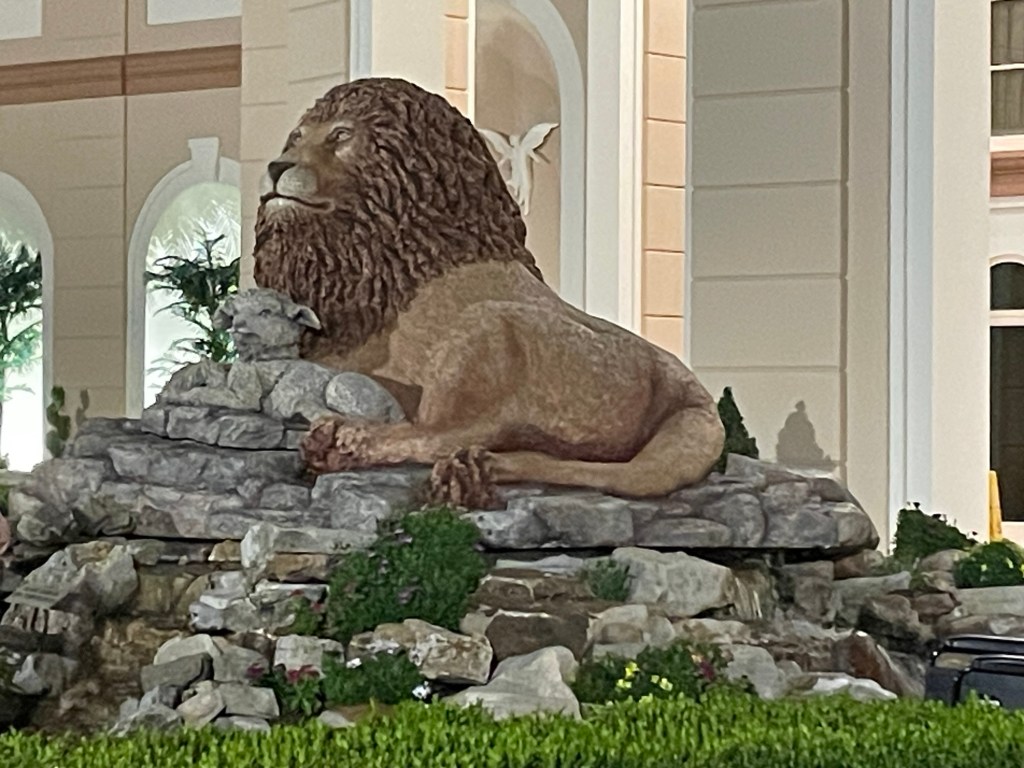
The statue of the lion and the lamb outside of the Sight & Sound Theatre
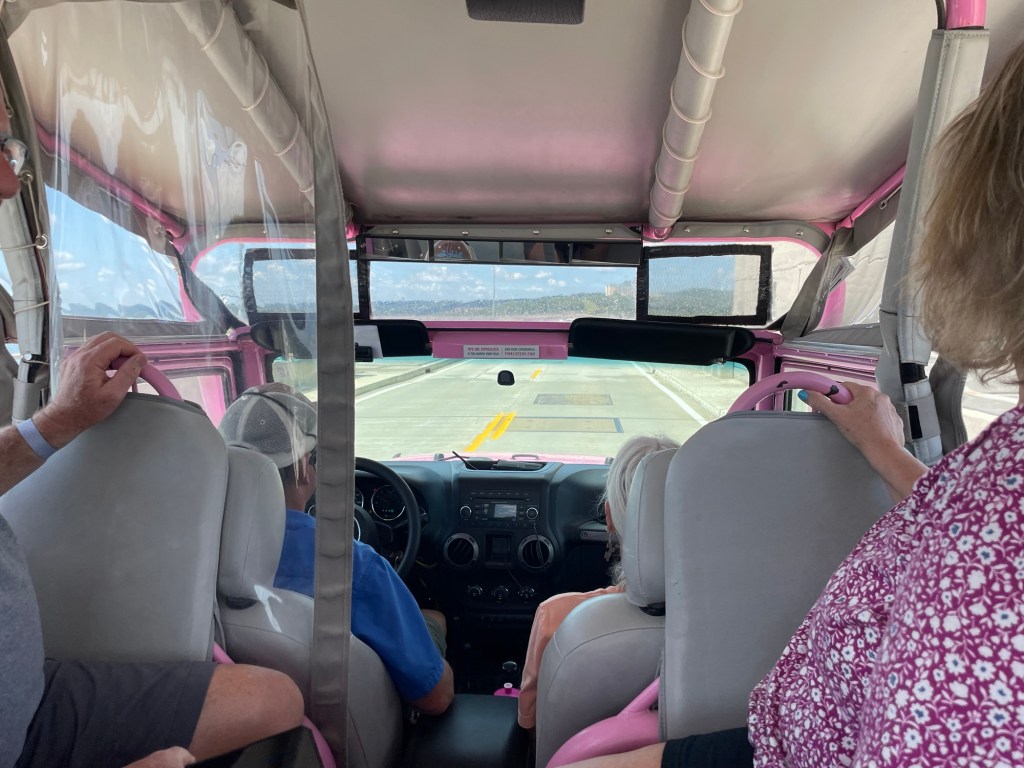
Our **Pink Jeep tour with Sid** took us off the beaten path and into the rugged heart of the Ozarks. The downtown Branson route combined with the mountaintop scenic tour gave us perspectives of this place that you just can’t get from the main roads. Winding through trails with panoramic views of valleys stretching endlessly, breathing in that mountain air – it felt like adventure and peace wrapped together.
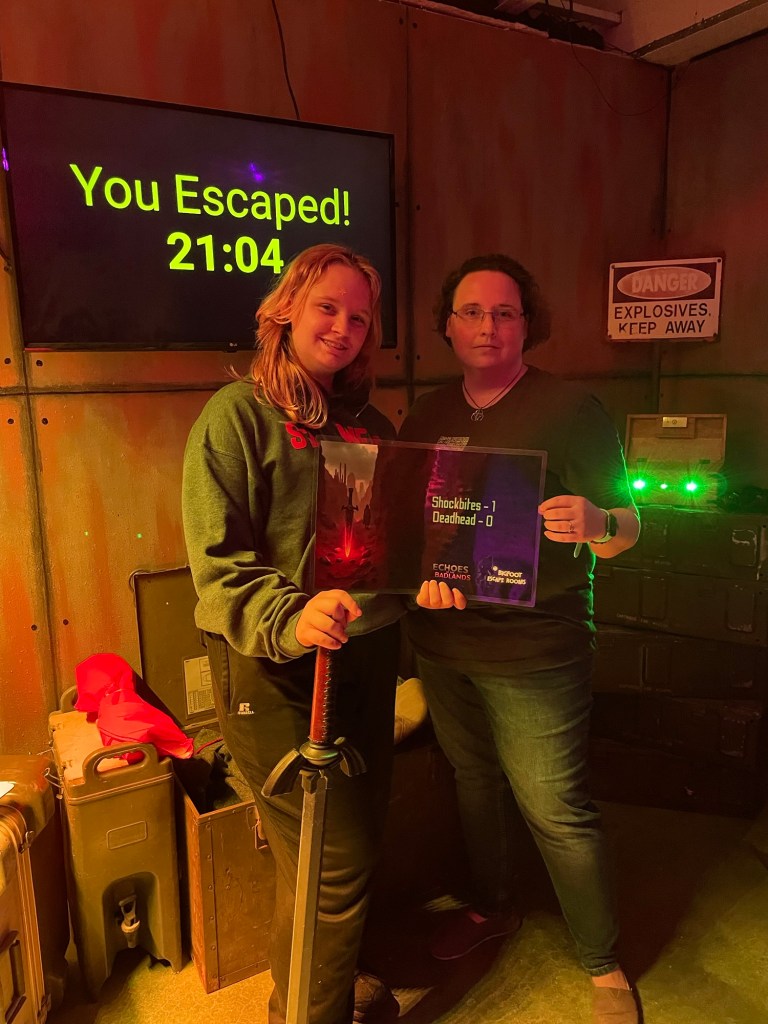
The **escape room experience** (“Echoes of the Badlands”) turned into an unexpected confidence boost when we finished with 21 minutes to spare! For a first-timer, working alongside two other groups and actually succeeding felt like proof that sometimes the best discoveries happen when you try something completely new.
Aspen and I after accomplishing our first room escape – can’t wait to do another one 😁
**Meeting Luke** added that personal touch that transforms a vacation from tourist activities to genuine connection. There’s something special about locals who love their place so much that their enthusiasm becomes contagious – suddenly you’re seeing Branson through the eyes of someone who calls it home.
Check out Full Throttle Distillery if you’re in the Branson area and ask for Luke! 🌟
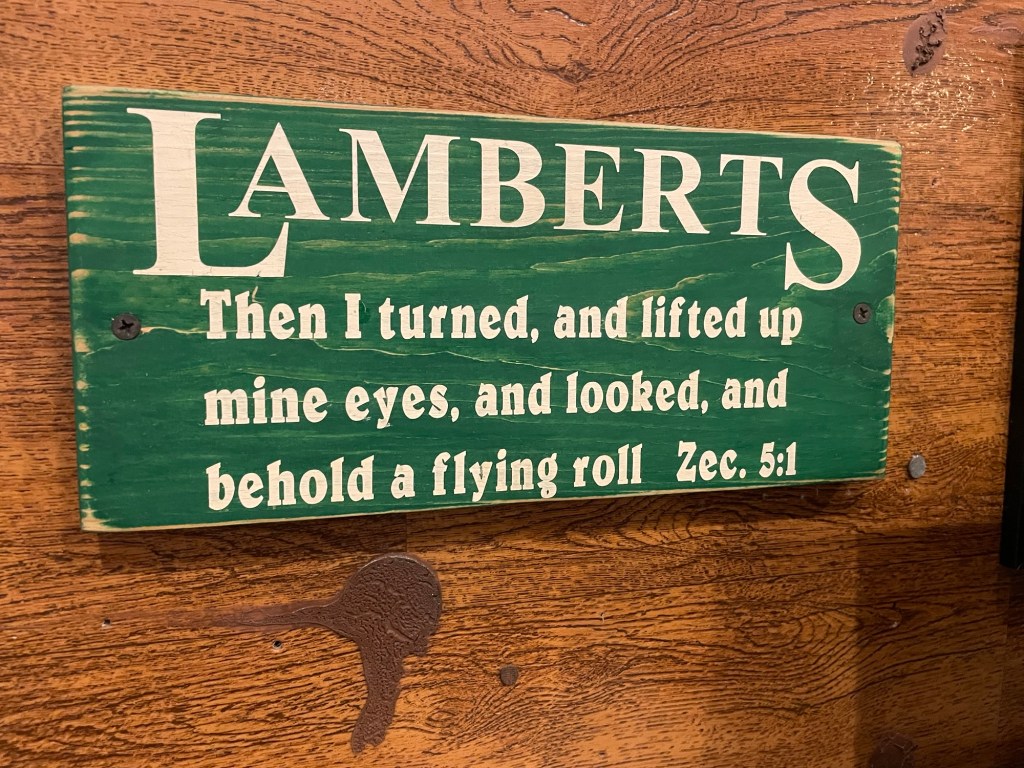
Even our practical moments became part of the adventure – **grocery shopping and craft mall exploring** on Monday, **making lasagna to last the week** (brilliant vacation meal planning), and **Aspen getting arcade time at the Bigfoot place** while Marcia enjoyed her shopping. These weren’t just logistics; they were the rhythm of family vacation life.
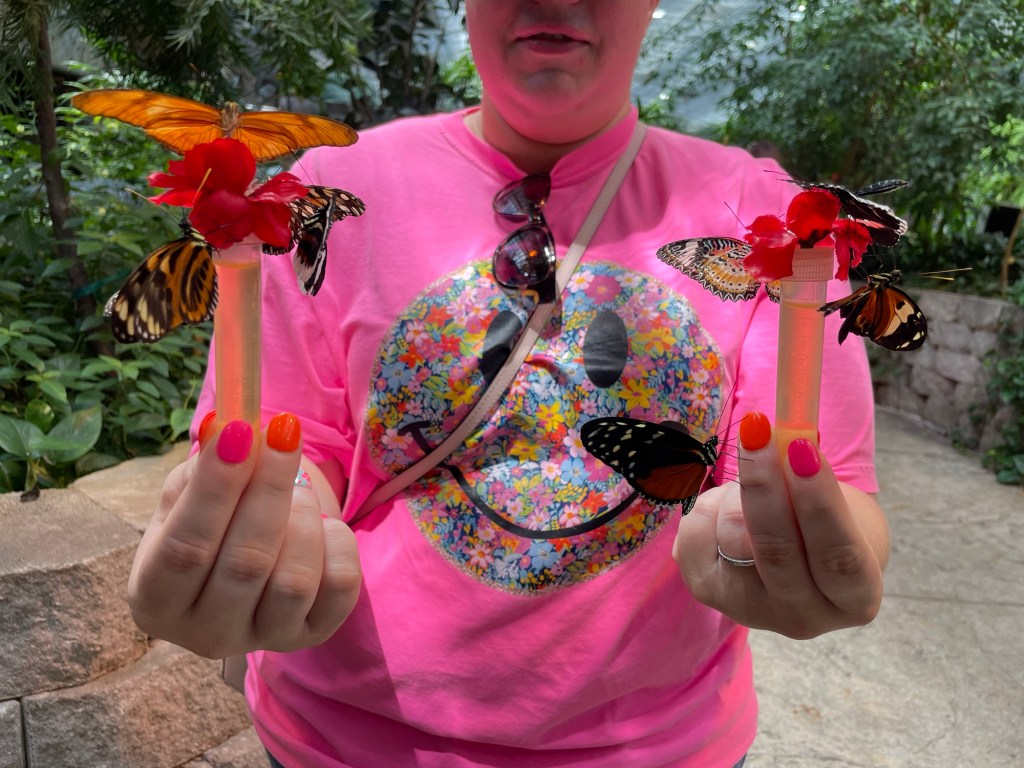
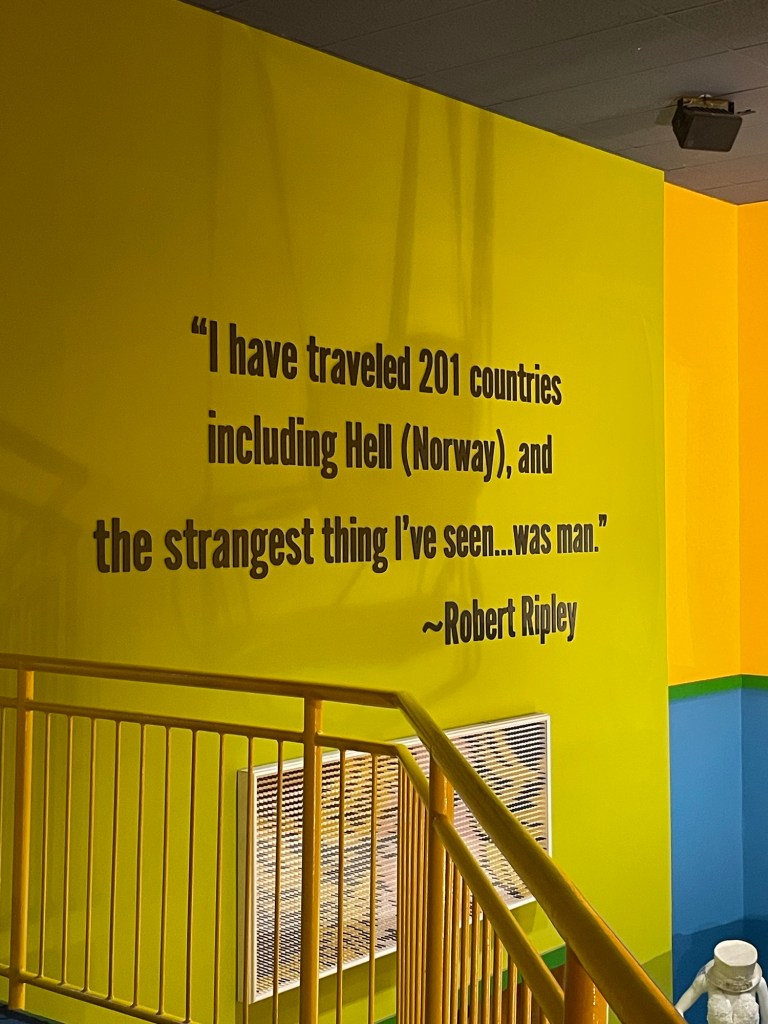
Experiencing the Butterfly Palace included trying to entice as many butterflies to the nectar tubes as you could – slow and calm was essential for them to stick around 🫶About the only place where it’s ok for people to throw food 😂One of the last Dick’s 5 & 10 stores in the USHollywood Wax Museum, plus Castle of Chaos – both were AWESOME to exploreRipley’s Believe It or Not Museum – I love this quote from Robert Ripley 🧡
The mountains don’t rush. They’ve been there for thousands of years, watching seasons change, storms pass, and families like ours create memories in their shadows. There’s something humbling about that kind of permanence when your daily life feels like it’s moving at warp speed.
## **Cabin Mornings & The Art of Slowing Down**
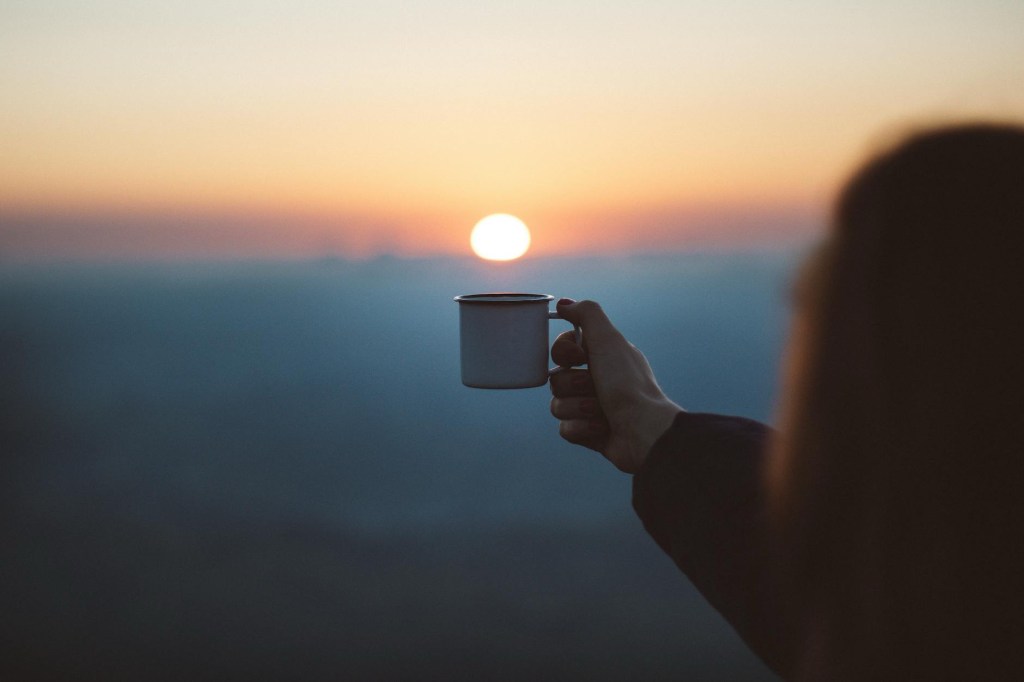
That first morning on the cabin porch changed everything. Coffee in hand, watching the world wake up without an agenda – I realized I’d forgotten how to just *be*. No mental checklist running in the background, no urgent emails demanding attention, no schedule dictating when this peaceful moment had to end.
The cabin porch became my classroom in the art of slowing down. The mountains were teaching me their rhythm: unhurried, steady, present.
I started noticing things I usually miss in the rush of daily life. The way morning light filtered through the trees differently each day. How the birds had their own schedule that had nothing to do with human urgency. The sound of absolutely nothing except nature doing what it does best – simply being.
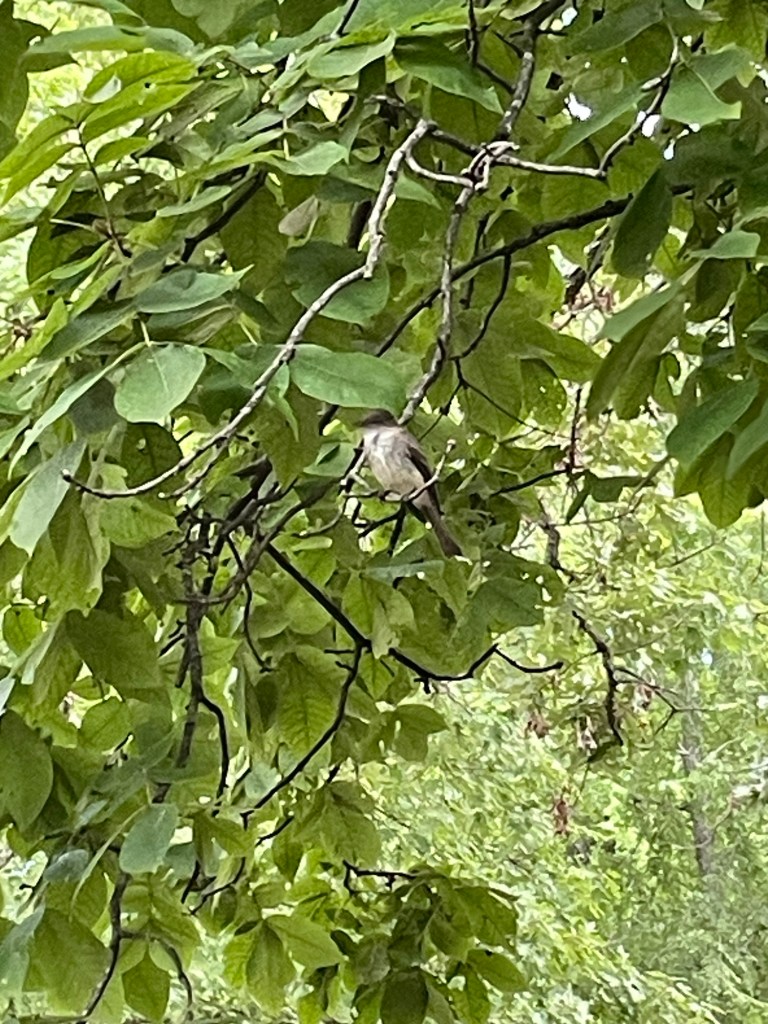
One of several visitors directly off of the cabin porch – they nested in the roof eaves and would flit back and forth with little whistles and chirps
Those cabin mornings reminded me that slowing down isn’t about being lazy or unproductive. It’s about remembering that life happens in moments, not just in achievements. It’s about giving yourself permission to exist without constantly doing.
## **Lessons from the Mountains**
The Ozarks don’t apologize for their pace. They don’t rush through seasons or hurry toward the next milestone. They simply are – magnificent, steady, and completely present in whatever season they’re experiencing.
Sitting on that cabin porch each morning, I realized I’d been treating my life like a race instead of a journey. Always focused on the next task, the next goal, the next thing that needed to be accomplished. The mountains were showing me a different way – the beauty of being fully present in the current season instead of rushing toward the next one.
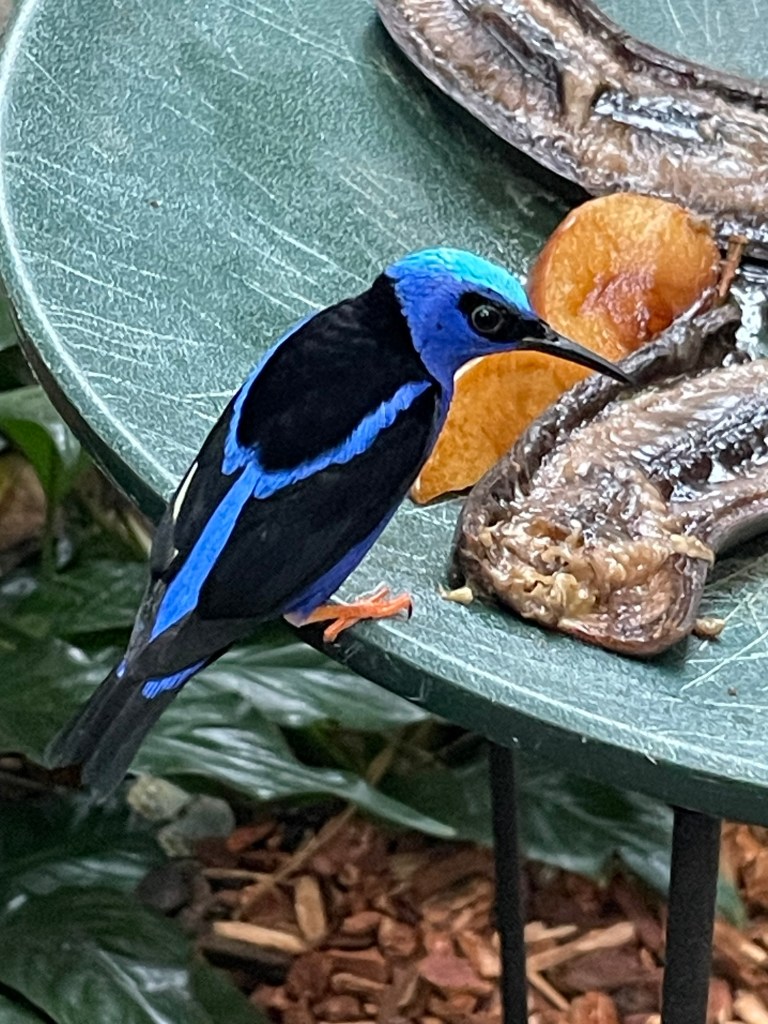
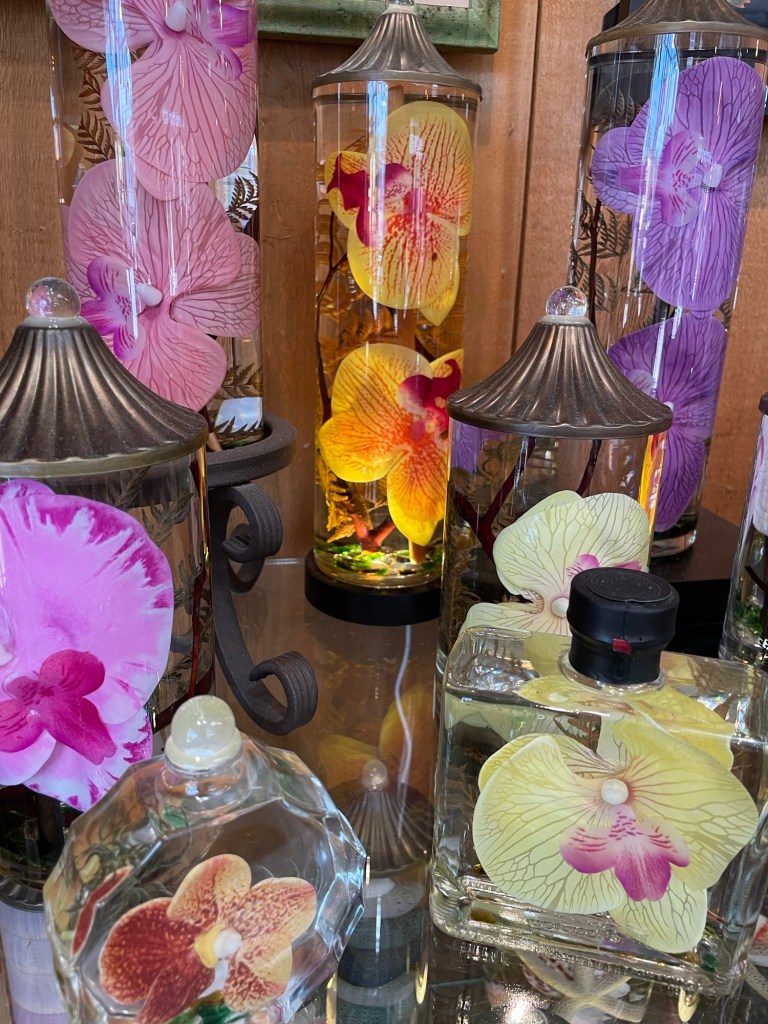
Vivid colored birds were also at the Butterfly PalaceLocal artisans offered incredible selections – these lifetime candles include a wick that paired with lamp oil endlessly burns (the one in the shop has been going for 42 years!)
This wasn’t just a vacation revelation; it was a life shift. The cabin became a sanctuary where I could practice the lost art of simply being present. No agenda except to notice. No timeline except the natural rhythm of sunrise and sunset.
## **Bringing Mountain Time Home**
The real test isn’t finding peace on a cabin porch in the Ozarks – it’s carrying that mountain rhythm back into everyday life. Those morning moments taught me that slowing down isn’t about changing my entire schedule; it’s about changing my relationship with time itself.
I’m learning to create cabin porch moments in my regular life. Five minutes with coffee before the day begins. A pause to actually taste my lunch instead of skipping or staying busy through it. Choosing to notice the sunset instead of rushing past it toward the next task.
The mountains reminded me that some of life’s most important moments happen in the spaces between – the unplanned conversations, the spontaneous detours, the decision to sit on the porch five minutes longer just because.
*What would change if you gave yourself permission to move at mountain time, even for just a few moments each day?*
2 AM thoughts on learning to slow down and find joy in the process
I thought today would start with sleeping in, but here I am at 2 AM, wide awake with my mind racing. There’s this familiar restless feeling I get when it seems like I’m running out of time on something important, you know?
These past couple weeks have been intense around our house. We’ve been working on projects everywhere – gave our daughter’s room a complete surprise makeover while she was at camp, did this massive decluttering sweep of furniture that’s been accumulating for years, and finally started on those yard projects I’ve been daydreaming about for months.
While I’m genuinely excited about all these changes, I kept finding myself caught between this overwhelming need to hurry and actually enjoying what I was doing. It was like I was stealing my own joy.
The Countdown Pressure
With our daughter away at camp for 18 days, I knew I wanted to get most of these projects done before she came home. She knew her room would be a different color, but had no idea about the new furniture and other surprises waiting. When she walked in yesterday, she seemed happy with the changes, but it was her reaction to the bathroom that got that classic excited squeal. That unexpected bonus ended up being the real winner.
But here’s the thing – I had this finite timeline pressing on me. Eighteen days minus work and other commitments. Plus I’d rented this big unit for hauling away construction debris and old furniture, which had its own deadline. And somewhere in the middle of all this, I decided to start a garden with plants that needed to get in the ground soon or they’d die.
Everything felt urgent. Everything felt like it had to happen now.
My All-or-Nothing Problem
This is totally my pattern – I get excited about something and dive in headfirst. Usually I can keep up the momentum long enough to push through to the end, or at least muscle through that “I don’t want to do this anymore” phase until it’s done. My perfectionist brain takes over, which creates this weird internal tension, but things generally get finished fast… and then completely abandoned for months.
Sound familiar to anyone else?
I realized I was doing that thing we all do – telling myself “as soon as this is done, I can relax.” But I’ve made that promise to myself so many times and either broken it or been too wound up to actually relax when the time came. I’d just be looking around for the next thing that “had to get done.”
The Garden Taught Me Something
When I was planning the garden areas, I knew they’d bring such satisfaction once completed, plus clear out both physical and mental clutter. But the bigger vision – the full garden I was imagining – couldn’t possibly happen in 18 days. It would take time. Patience. Waiting for things to grow.
Yet even knowing this, I kept feeling like I had to do everything immediately: put down all the weed barrier, buy every raised bed I’d eventually need, get all the soil and mulch in one massive shopping trip. Just thinking about it was exhausting.
That’s when something clicked.
What Actually Worked
I started sorting my projects into two categories: “Time Crunch” (like my daughter’s room and that rental deadline) and “Ongoing” (like the garden and other long-term home improvements).
When I caught myself trying to rush the ongoing stuff, I’d stop and ask: Why does this feel urgent right now?
Most of the time, it was just habit. Sometimes there really was a piece that made sense to tackle alongside the time-sensitive work, but I’d set clear boundaries about when to stop.
This simple shift changed everything.
Learning to Love the Wait
Taking things in smaller pieces actually makes everything more sustainable. It’s like having a daily reminder of where you’re headed without the crushing pressure to get there immediately. You build consistency, which builds resilience, and somehow there’s more room for actually enjoying the process.
The 2 AM wake-ups still happen. That restless feeling when something feels unfinished still hits. But I’m learning that sometimes the most important thing you can do is slow down and trust that not everything has to happen on your timeline.
I’m starting to see this shift help with other areas too – eating better, moving more, being more present with family, keeping less stuff around the house. Small, consistent changes instead of dramatic overhauls that burn me out.
What I’m Learning About Joy
Here’s what I’m figuring out: pushing hard to accomplish massive amounts in short bursts isn’t sustainable. It’s not healthy. And it definitely doesn’t leave room for joy in the process.
I’m learning to make the waiting part of the plan. To trust that good things take time to develop, whether it’s a garden, a relationship, a skill, or just a more peaceful way of living.
The projects will get done. Maybe not all at once, maybe not on my original timeline, but they’ll get done. And maybe, if I’m patient with the process, I’ll actually enjoy getting there.
Anyone else struggle with the “everything must happen now” feeling? I’d love to hear how you’ve learned to slow down and find joy in the process.
Some of my most treasured childhood memories are painted in the vibrant colors of my Opa’s hillside garden. This wasn’t just any garden—it was a masterpiece that took years to create, transforming a steep slope into what felt like my own personal Disneyland. 😂
Picture this: winding paths that led you through completely different worlds. One moment you’d be wandering through an English countryside section, complete with thistle and ivy. Turn a corner, and you’d discover a tranquil pond he’d built himself, complete with aquatic plants and fish. Keep exploring, and you’d find yourself under Italian-style grape arbors, their wooden supports heavy with cascading vines.
But here’s the secret every kid knew—if you could sneak away from the adults and get there first, the tiny wild strawberries hidden in another section were pure summer magic. Each area had its own personality, separated by those meandering paths that would dip and climb through terraced sections. Standing at the garden’s edge, you could look back and see the whole property: the house, workshop, and wood storage—each its own little adventure waiting to happen.
Those summer visits didn’t just shape my love for gardening; they planted seeds (pun intended!) for how I’d later approach the projects my parents tackled when we moved to Texas.
Now, I’ll be honest—most of my gardening attempts have followed the same pattern: explosive enthusiasm in spring, followed by a quick surrender when Texas summer heat becomes unbearable. But something shifted these past couple years as my focus moved from life’s constant hustle to embracing the pause.
And this year? We’re off to an incredible start.
The start of the new garden area
Instead of rushing headfirst into my full garden vision (because let’s be real, that’s usually where I burn out), I’m taking my time. What a blessing this extra rain and cooler weather has been! As we continue adding to the beds, I’m watching the space grow and evolve naturally—just like Opa’s garden did.
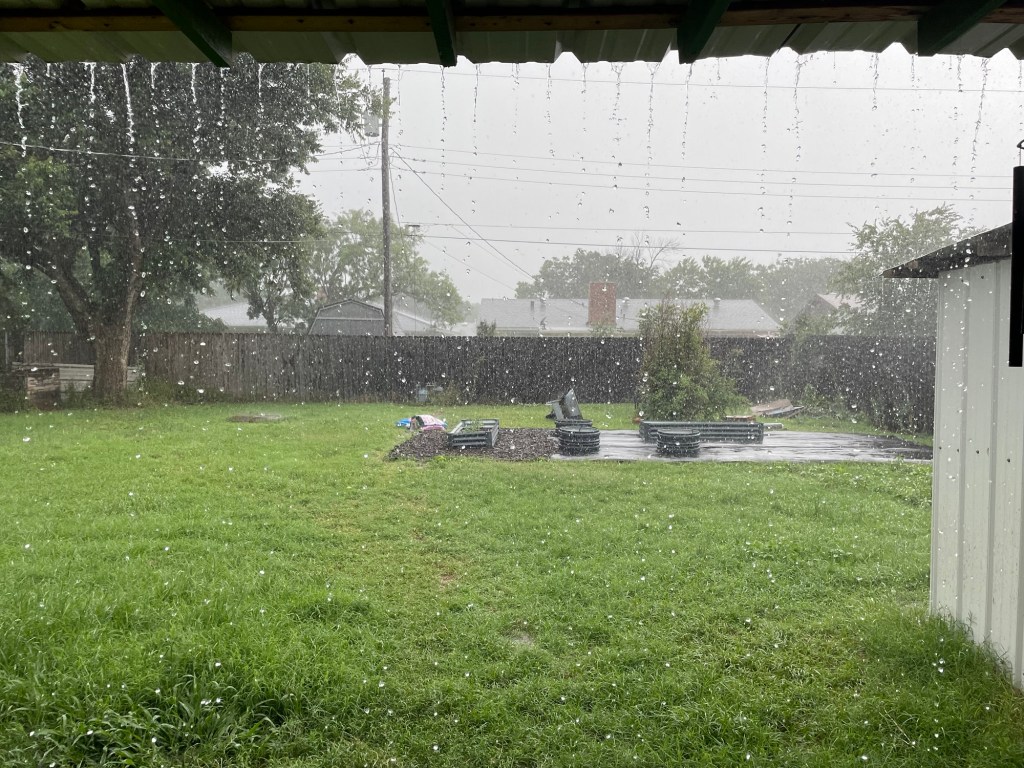
Heavy rain over the last few days – thank you Lord for this blessing 🧡
I can already see it in my mind: vegetables growing to nourish our family, friends, and neighbors. Flowers blooming to support our pollinators and inspire new artwork. A peaceful retreat where I can start and end each day with gratitude, away from the world’s noise.
The best part? This is just the beginning. I can’t wait to share this journey with you and watch this space transform over time—one thoughtful addition at a time.
Growing up as a military kid meant my musical foundation developed in patches across different bases and countries. Not every school had a dedicated choir program, but music found me anyway—through radio waves and the carefully curated cassette tapes we carried from station to station.
I still smile remembering the agony of choosing songs for my dad to record onto those precious tapes. The pressure of selecting a “favorite” felt impossible (honestly, how can anyone pick just one?), and my final playlist probably mirrored everyone else’s. But that’s how we discover ourselves, isn’t it? Through the familiar before we find our unique voice.
Music remains one of my most trusted companions, especially when words fail me. There’s something magical about how lyrics become poetry and melodies amplify the emotional depths of our experiences—the soaring highs and tender lows that make us human.
Songs Speaking to My Heart This Week:
• Burn the Ships – For King & Country • I Believe in Love – Barlow Girl • Counting My Blessings – Seph Schlueter • Against the Tide (The Captain’s Tarantella) – Sail North
Yes, that last one’s a sea shanty—because who doesn’t love a good nautical adventure song? Each of these has stirred something different in my spirit recently.
“Burn the Ships” reminds me not to cling to the past out of fear. Sometimes we need to cut off our escape routes to truly move forward in faith, trusting that God walks with us into the unknown.
“I Believe in Love” speaks to those moments when I can’t see God’s presence but know He’s there—like feeling the wind without seeing it, His love surrounds us even in our blindest moments.
“Counting My Blessings” captures something beautiful: “I’ll keep counting my blessings, knowing I can’t count that high.” When we pause to notice the intricate details of God’s gifts, we realize gratitude could be a full-time job. “I run out of numbers before I can thank you for everything.”
“Against the Tide” connects to my favorite scripture, Romans 12:2: “Do not conform to the pattern of this world, but be transformed by the renewing of your mind.” The world’s current constantly pushes us toward conformity, but we’re called to sail against that tide—to be transformed into Christ’s image. While I’m not sure about Jesus as a pirate captain, the adventurous imagery has sparked some exciting painting ideas outside my usual scope!
Tonight’s Return to Live Streaming
Speaking of creative adventures, we’re back tonight! This evening’s stream will be shorter and different as we settle back into rhythm. With Aspen at camp and some major studio reorganizing happening, I’m excited to share project updates and future plans that I’ll be exploring here on the blog.
I’ve restarted my garden and we’re working on a studio reset—perfect timing to share some tips if you’re also in a season of refresh and renewal.
This will be a shorter “hello and catch-up” session. We’ll dive back into live creating on June 12th!
So, take a moment to quiet your breath and focus your mind.
God, we thank you for the beautiful music you inspire artists to create and share that in turn inspires and connects us closer to you. We thank you for another day to make choices and to share your love with others, choosing to show patience, kindness, and grace even when we get frustrated or feel like we’re in a hurry. Father, we’re thankful for the opportunity to connect in different ways, including digitally, and ask for your guidance and protection that week as we go through our days. Amen.
Friends — what songs are inspiring you? What lyrics keep coming to mind lately? Please share them in the comments below.
Sometimes the most spiritual decision we can make is to stop trying to do it all.
This past week, I found myself caught in that all-too-familiar whirlwind of commitments. Between my church responsibilities, family needs, and creative pursuits, something had to give. I missed posting about our Thursday live session being postponed, then completely forgot to cancel a physical therapy appointment due to schedule conflicts piling up.
In that moment of overwhelm, I heard that still, small voice reminding me: “You don’t have to do everything, Samantha.”
So I made the decision to pause. To breathe. To post a simple update letting our community know that I’m taking time to focus on family, with our next live session resuming on June 5th.
And you know what? The world didn’t end. In fact, something beautiful happened in that space of saying “no.”
The Sacred Art of Leaving Things Undone
We live in a culture that glorifies productivity and full calendars. Even in ministry and creative work, we can fall into the trap of believing our worth comes from what we accomplish.
But what if some of our most faithful moments are when we choose to leave things undone?
When Jesus withdrew to quiet places to pray, He often left crowds waiting. He understood that spiritual renewal wasn’t a luxury—it was essential to His purpose.
Similarly, our spiritual practice can become deeper when we:
– Allow ourselves to move at a sustainable pace, without rushing
– Embrace imperfection rather than striving for flawless performance
– Take intentional breaks to listen and reconnect with our purpose
– Leave some tasks unfinished when our spirits need rest
Finding God in the Blank Spaces
My zentangle practice has taught me to appreciate the white space—the untouched areas that give definition to the patterns. Without these empty spaces, the design would lose its beauty and meaning.
Our lives work the same way. Without margins and pauses, we lose perspective on what matters most.
Today, I invite you to join me in a simple practice: set a timer for 10 minutes. Begin creating—whether it’s doodling, painting, or whatever form calls to you. When the timer sounds, put down your tools and simply observe your work. Notice the completed areas and the spaces still waiting. Breathe deeply and offer a simple prayer: “Thank you, God, for the gift of limits. For reminding me that I am human, not divine. For loving me in my incompleteness.”
Remember, friends, we weren’t created to do everything. We were created to do our part, with love and presence, and then to rest in the knowledge that God’s work continues even when we pause.
What helps you remember to rest and set boundaries? I’d love to hear in the comments below.
With grace and paintbrushes,
Samantha
P.S. Our next live art session will be on Thursday, June 5th at 7:00 PM CST. I can’t wait to create with you all again after this restorative break!
There’s something deeply humbling about standing in front of an unfinished canvas. As I work on my latest mixed media piece, I find myself in that familiar space between vision and completion – that “ugly stage” where nothing quite looks like the picture in my head.
You know that moment? When the layers aren’t quite cohesive, the colors haven’t found their harmony, and your artistic vision seems to be playing hide and seek? I’ve been there countless times, brush in hand, fighting the urge to force the piece into submission.
But here’s what I’m learning: Sometimes the most powerful thing we can do is simply… pause.
As I weave scripture through my work – verses about dawn breaking forth, souls finding rest, and everything becoming beautiful in its time – I’m struck by how perfectly this creative process mirrors our spiritual journey. How often do I try to take the reins from God, attempting to force my own timing onto His perfect plan?
It’s a pattern I see in both my art and my walk with Christ. That restless energy to rush through the uncomfortable middle stages, the desire to skip straight to the finished product. But just as forcing a painting rarely leads to the outcome we hope for, trying to hurry God’s timing only leaves us frustrated and exhausted.
The Holy Spirit has been teaching me the sacred art of waiting. Of letting each layer dry before adding the next. Of stepping back when my instinct is to push forward. It’s in these pause points that the most beautiful transformations often occur – both on canvas and in spirit.
Maybe you’re in one of those waiting seasons right now. Perhaps you’re standing in your own “ugly stage,” wondering if anything beautiful can emerge from this unfinished space. I want you to know something: this pause is not a punishment. It’s not a dead end. It’s a holy invitation to trust the Artist who sees the finished masterpiece even when we can’t.
Just as I’m learning to trust the creative process – adding paper scraps here, texture there, letting the glazes marry the layers together in their own time – we’re all learning to trust God’s process in our lives. Sometimes it means sitting with the discomfort of the unfinished. Sometimes it means celebrating the beauty of the “not yet.”
So I’m setting down my brushes earlier than planned. I’m choosing to rest in the wait, to trust the process, and to remember that even this in-between stage is sacred ground.
To those of you in your own season of waiting: take heart. You’re not alone in this space of becoming. The pause is not the end of your story – it’s often where the most important work happens. Rest here awhile. Trust the process. Your next beautiful layer is coming.
There’s a beautiful paradox in servant leadership that I’ve come to know intimately. When we’re called to pour into others’ lives through service and leadership, we sometimes forget that we too are vessels meant to be filled, not just emptied.
Recently, my journey through leadership and creative ministry led to a profound realization, sparked by my daughter’s honest observation about our family time becoming increasingly squeezed between commitments. Her wisdom was both a wake-up call and a gift from God – sometimes truth comes from the most unexpected places.
The Martyr Pattern
It’s easy to fall into what I call the “holy hustle” – that deceptive pattern where we mistake constant availability for spiritual devotion. We fill every space meant for rest with one more task, one more project, one more need to meet. I found myself saying yes to everything, believing that immediate response equated to better service. But here’s the truth I’m learning: depleted leaders cannot fully serve God’s purpose.
Sacred Permission
Jesus himself modeled a different way. Mark 1:35 tells us, “Very early in the morning, while it was still dark, Jesus got up, left the house and went off to a solitary place, where he prayed.” This wasn’t a one-time occurrence – it was a pattern. The Son of God, who had the most important mission in history, prioritized withdrawal and renewal.
Art as Spiritual Expression
In my journey toward balance, God has been teaching me through an unexpected medium – art. As I create zentangle designs while meditating on scripture, each stroke becomes a prayer, each pattern a reminder that beauty requires both positive and negative space. Just as white space gives meaning to design, periods of rest and reflection give depth to our service.
Finding God in the Struggle
The transformation from seeking external validation to finding our worth in God’s calling is ongoing. I’m learning that effective leadership isn’t about perfect performance but about authentic alignment with Jesus. When I take time for prayer before diving into my day, I find my time management improves, my patience deepens, and my focus naturally shifts to what truly matters.
Practical Steps Toward Sacred Balance
Create boundaries that honor both God and your wellbeing
Schedule regular times for spiritual and creative renewal
Learn to say “not now” without guilt
Find sacred moments in daily transitions
Use art or other creative expressions as a form of prayer
The Cup Refilled
Leadership isn’t about emptying ourselves completely – it’s about allowing God to continuously fill us so we can serve from our overflow. When we prioritize our spiritual wholeness, we don’t just serve better; we reflect God’s character more clearly.
As I continue this journey of balancing various roles – creative ministry, family life, and service – I’m discovering that the most powerful leadership doesn’t come from constant doing but from being – being present, being filled, being aligned with God’s rhythm of work and rest.
What sacred patterns are you creating in your life to ensure your cup stays full while serving others?
SEO Meta-Description: Dive into the colorful and creative realm of mixed media artwork! Discover unique techniques, essential tools, artistic inspiration, and answers to your top questions about this captivating art form.
Introduction
Mixed media artwork is like a playground for creativity, where different materials, textures, and techniques come together to create something truly magical. It’s not bound by rules or confined to a single medium, making it a favorite among artists who love experimenting with layers, colors, and unconventional tools. Whether you’re a seasoned artist or a curious beginner, mixed media offers endless possibilities to express your unique vision.
In this article, we’ll explore the fascinating world of mixed media artwork, break down techniques, suggest must-have tools, provide tips for beginners, and answer some common questions. Plus, we’ll share a sprinkle of inspiration to help you start (or elevate) your next masterpiece!
What is Mixed Media Artwork?
At its core, mixed media artwork refers to any art piece created using more than one medium or material. For instance, you might combine acrylic paint with collage elements, or pair watercolors with ink. The beauty is in the blending—artists experiment with textures, layers, and materials to craft visually captivating pieces.
2017 – first mixed media attempt with a faux leaf, bottle caps, ribbon pieces, acrylic paint, alcohol ink, and sharpie marker
Common Materials in Mixed Media
Mixed media artwork can include a wide variety of materials, such as:
Paint: Acrylics, watercolors, gouache, or even spray paint.
Ink and Markers: Alcohol inks, oil-based markers, or fine liners.
Paper Elements: Torn pages, newspaper clippings, origami paper, or tissue paper.
Found Objects: Buttons, fabric scraps, string, or natural elements like dried leaves.
Texture Additives: Modeling paste, sand, or gel mediums.
The possibilities are endless, and the only limit is your imagination!
Techniques to Elevate Your Mixed Media Artwork
Mixed media art thrives on layering and experimentation. Here are a few techniques to try out:
1. Layering with Transparency
Use translucent materials like vellum or tissue paper to create depth. Paint or draw over them to add interest without completely covering the underlying layers.
2. Collage Meets Paint
Tear out magazine pages, book text, or old maps and glue them onto your canvas. Then, paint over them with acrylics or watercolors, letting some of the collage elements peek through.
3. Textured Base Layers
Start with a textured base by applying modeling paste or gesso to your canvas. Use a palette knife for uneven, dramatic textures. Once dried, paint over it for a dynamic effect.
4. Incorporate Stamping
Hand-carved stamps or store-bought ones can add interesting patterns. Use ink or acrylic paint to stamp designs onto your artwork.
5. Alcohol Ink on Acrylic
Combine alcohol ink with acrylic paint for vibrant, flowing effects. These two mediums interact uniquely, creating stunning abstract designs.
6. Doodling on Top
Once your layers are dry, grab a fine-tip marker or oil-based paint pen. Draw zentangle patterns, nature-inspired designs, or words that align with your theme.
2018 – built upon a base layer of multiple acrylic colors, this piece utilizes scrapbooking templates for positive quotes, sharpie for doodle/highlight elements and handwritten words, as well as mini bundlet paper cups for the center of each flower
7. Resist Technique
Use masking tape, wax, or oil pastel as a resist before applying watercolors. Once you peel it away, your design will have crisp, clean lines.
Must-Have Tools and Supplies for Mixed Media Artwork
Building your mixed media toolkit doesn’t have to break the bank. Here’s a list of essentials to get started:
Canvas or Substrate: Stretched canvas, watercolor paper, wood panels, or even old book covers.
Paint: Start with acrylic paint for its versatility and quick-drying nature.
Adhesives: Matte gel medium, Mod Podge, or a strong glue stick.
Brushes: Get a variety of sizes, including flat and round brushes.
Palette Knife: Perfect for spreading paste or creating texture.
Markers or Pens: Oil-based paint pens or permanent markers for fine details.
Texture Tools: Bubble wrap, stencils, or sponges for creating patterns.
Protective Finish: A clear varnish or spray sealant to preserve your work.
Pro Tip: Don’t shy away from using household items like old credit cards, combs, or toothpicks to create unique effects!
Tips for Beginners in Mixed Media
Starting with mixed media can feel overwhelming because of the sheer variety of materials and techniques. Here’s how to keep it simple and fun:
Start Small: Begin with a small canvas or paper to practice layering without feeling intimidated.
Limit Your Palette: Stick to 3-5 colors to maintain harmony in your piece.
Embrace Mistakes: Happy accidents are part of the process! If you mess up, just layer over it.
Experiment Freely: Mixed media is all about play—try combining things you wouldn’t normally pair.
Build Gradually: Layer your materials in stages, letting each layer dry before adding the next.
Use What You Have: Before running to the art store, look around your home for items like magazines, fabric scraps, or even coffee grounds for texture.
Using what you have can include texture paste layered over metal bracket templates, or even the cap from your fabric refresh container. Almost anything can be used with mixed media designs.2017 – a blend of acrylic and alcohol ink has painted gravel for the tree trunk and group, then a unique fluffed ribbon for the limbs of the tree. The pink shade of the ribbon evokes the imagery of cherry blossoms in bloom.
Why Choose Mixed Media Artwork?
Mixed media isn’t just visually appealing—it’s also deeply therapeutic. The process of layering materials and improvising as you go can be incredibly freeing. Plus, it’s a fantastic way to repurpose and upcycle objects, making it an eco-friendly art form.
Garage sales are a wonderland for the mixed media artist – found supplies have included different textures of ribbon, craft paper, and many tins of buttons in unique designs and shapes. This piece also includes costume jewelry and a colorful acrylic background.
For artists, mixed media presents endless opportunities to push boundaries and develop a unique style. It encourages you to think outside the box and create pieces that truly stand out.
FAQs About Mixed Media Artwork
Q: Can I use mixed media on any surface? A: Almost! While canvas and paper are popular choices, you can also use wood, fabric, or even glass. Just make sure to prep the surface with gesso or a primer if needed.
Q: What’s the best way to seal mixed media art? A: Use a clear varnish or spray sealant to protect your artwork from dust and fading. Make sure it’s compatible with the materials you’ve used.
Q: Do I need expensive supplies to start? A: Not at all! Start with basic materials like acrylic paints, markers, and a glue stick. You can always add more tools to your collection as you grow.
Even simple supplies can have an impact. This piece from 2017 uses tissue paper for the tree. Some parts were flat layers that built the trunk texture, while the branches were made from rolled and twisted tissue paper segments.
Q: Can beginners create professional-looking mixed media art? A: Absolutely! With practice and patience, even simple techniques can produce stunning results. Remember, mixed media is about creativity, not perfection.
Q: How do I come up with ideas for mixed media artwork? A: Inspiration is everywhere—nature, photographs, music, or even a verse from a poem. Start by doodling or experimenting with colors, and let the piece evolve naturally.
Conclusion
2019 – my peacock 🧡 this piece started with the main subject with the other elements evolving around it. For the peacock, give the picture a zoom — it’s built out of individual hole punched scrapbook paper!
Mixed media artwork is a captivating art form that invites you to explore, experiment, and express yourself without boundaries. Whether you’re layering paint, collaging paper, or incorporating unexpected objects, every piece tells a story that’s uniquely yours.
So, roll up your sleeves and dive into the world of mixed media. Let your imagination run wild, and don’t be afraid to make a mess along the way. After all, art is as much about the process as the final product. Happy creating!